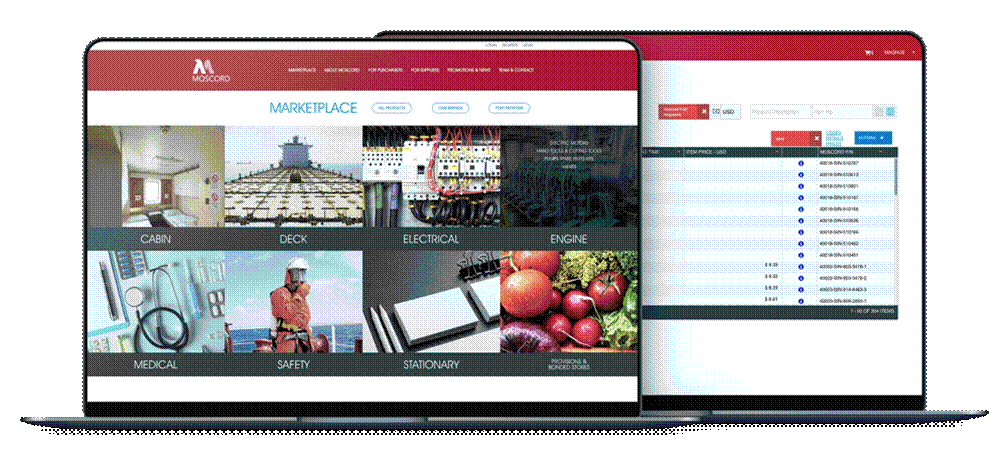
Traditionally, maritime procurement primarily relied on traditional methods, which included manual processes involving phone calls, emails, and faxes that were time-consuming and prone to errors. Shipping companies often depended on local suppliers, limiting their options and frequently resulting in higher costs due to a lack of competition. Many companies also used outdated software systems for inventory management and procurement that were not integrated with other operational systems, leading to inefficiencies in tracking supplies and managing orders.
All these factors signaled a space ripe for disruption on the surface. In reality, procurement operations were very much conducted based on existing relationships that leveraged trust and reliability between the procurement team and suppliers usually built up over decades.
Overcoming “It’s the way things are done” mindset
Launched in 2016, Moscord introduced its digital platform with the vision of revolutionizing maritime procurement. It was not the only player to identify this market opportunity, but thanks to its founder, Freddy Ingemann’s deep operational knowledge of online procurement within the shipping industry, Moscord’s platform was set up from the get-go to ensure it materially improved the procurement process for teams as well as for management. Moscord offered streamlined processes, enhanced pipeline visibility, and improved communication channels between stakeholders. These advancements addressed many of the inefficiencies that characterized the industry in the past. Importantly, Moscord also was able to show it could save companies 20% on supplies by eliminating intermediaries and streamlining the procurement process as well as increasing transparency.
A maritime marketplace for everyone
Moscord offers a comprehensive marketplace where maritime companies can easily find and procure ship supplies and services, serving as centralized hub and allowing users to compare options and make informed decisions. Today, the platform claims to provide a range of more than 200,000 products at predetermined contracted costs, including consumables, supplies, spare parts, safety equipment, electronics, tools, and personal protective equipment.It also features an extensive network of ports across the globe, including major locations such as Miami, Houston, Shanghai, and Rotterdam. This connectivity enables users to access a wide range of suppliers and services tailored to their operational needs. Moscord ultimately facilitates direct communication between buyers and suppliers, reducing delays and misunderstandings that often occur in traditional procurement processes.
Final thoughts
By digitizing procurement processes, Moscord helps maritime companies save time and reduce costs associated with manual procurement methods. This efficiency is particularly valuable in an industry where timely access to supplies can materially impact operational success. The challenge for these platforms has always been about overcoming entrenched biases that favor the old way of doing things. However, as digitalization sweeps across the industry, widespread adoption over time is a foregone conclusion. Scale, product depth, and network size are key in this space. With that in hand, Moscord looks well placed to claim it’s the way procurement is done.
References
Moscord | A Better Way Forward. (n.d.). https://www.moscord.com/
Transport, H. E. (2020, February 20). Moscord and Nyborg aim to deliver convenience, control and savings for shipowners worldwide – Haven en Transport. Haven En Transport. https://www.havenentransport.nl/moscord-and-nyborg-aim-to-deliver-convenience-control-and-savings-for-shipowners-worldwide/
Contributor : Ariana Tri Asti
Reviewer : Imam Buchari



 Scorpa's Tech @ Sea
Leave a comment