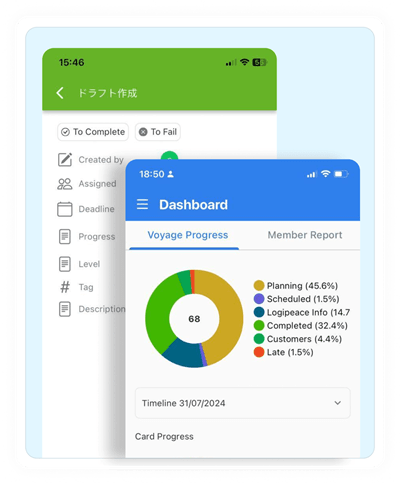
source : https://www.shipeace.com/
In the high-stakes world of maritime logistics, its often the slow, silent drag of poor communication that’s costing shipowners millions in lost profits. Every operator knows the drill: endless threads of emails, WhatsApp messages from agents, a last-minute call from the port, and documents lost in someone’s inbox. Amid this chaos, coordination fails and efficiency sinks.
Singapore-based startup Logipeace is betting that better communication that is centralized, traceable, and intelligent is the next frontier of maritime digitalization. Its flagship platform, Shipeace, isn’t trying to track ships or automate trade documents. It’s aiming to do something more fundamental: make it easier for humans in the shipping chain to talk, share, and act in sync.
$10 Trillion in traded goods coordinated by whatsapp and spreadsheets
Global maritime trade powers 90% of world commerce, valued at over US$10 trillion annually. Yet much of the industry’s coordination still relies on ad hoc tools: spreadsheets, inboxes, group chats, and paper.
When vessels miss berthing windows or container delivery instructions fall through the cracks, the cost is measured in demurrage, detention, and strained client relationships. The problem isn’t a lack of effort, everyone is working hard in this 24/7 industry. The problem is fragmentation. While other maritime tech players target fleet performance or predictive maintenance to make the industry more efficient, Shipeace tackles these day-to-day frictions that cost operators time, money and reputation.
The Shipeace Approach: Rewiring the Backchannel
Founded in 2022 by Tomoko Kamiya, Shipeace addresses these challenges by consolidating various communication channels into a single, streamlined interface. By integrating emails, chats, phone calls, and documents, the platform ensures that all stakeholders have real-time access to critical information, reducing the chances of miscommunication and delays.
Key features of Shipeace include:
- Unified Communication Threading: All chats, emails, calls, and documents live in a centralized, searchable space organized by task, not just sender.
- Audit-Grade Accountability: Timestamped logs and digital trails eliminate the ambiguity of who said what, and when.
- AI-Powered Prioritization: The platform intelligently flags key messages and operational bottlenecks for rapid intervention.
- Streamlined Documentation: Users can manage and share customs forms, bills of lading, and handover notes without switching platforms.
Building Credibility with Sector-First Investors
In October 2024 , Logipeace secured a $1 million seed funding round, backed by strategic investors familiar to the shipping world’s nuances:
Genesia Ventures
Kyushu Open Innovation Fund
Hyogo Kobe Startup Fund
This early support reflects growing investor confidence in platforms that go beyond dashboards and bring true coordination infrastructure to the maritime domain.
Why This Matters
Shipeace isn’t offering the industry a silver bullet to all its problems, nor is it claiming to replace human expertise. Instead, it’s building the connective tissue that allows hard working maritime talent to shine by helping to ensure operations don’t stumble because of missed messages in a sea of fragmented communication platforms.
In an industry known for its siloed communication and risk-averse culture, the take-up of tools like Shipeace are hinting at a deeper shift. Maritime stakeholders aren’t just asking for digital tools, they’re demanding platforms that work the way their teams do: cross-functional, real-time, and operationally aware.
Whether Shipeace becomes the default coordination layer for shipping companies remains to be seen. But its emergence signals that the era of the infamous “I never saw that email” may finally be coming to an end.
Contributor : Dyah Ayuning tyas
Reviewer : Imam Buchari, David Ratner

 Scorpa's Tech @ Sea
Leave a comment