
As global efforts to decarbonize intensify, SolarDuck is emerging as a game-changer in the maritime and energy sectors. Founded in 2019 in the Netherlands, SolarDuck offers a breakthrough offshore floating solar (OFS) technology that turns the ocean surface into a clean energy generator, paving the way for renewable power far from shore. While offshore wind is often seen as the go-to maritime renewable, its feasibility is limited in regions with low wind speeds but high solar irradiance such as Southeast Asia, West Africa, and equatorial zones.
Here lies the opportunity: vast ocean surfaces exposed to abundant sunlight, waiting to be harnessed. That’s exactly what SolarDuck intends to do with floating solar islands engineered specifically for rough marine environments. SolarDuck was co-founded by a team of maritime and energy professionals with a strong heritage in Dutch shipbuilding and offshore innovation:
- Koen Burgers (CEO), formerly at Damen Shipyards
- Don Hoogendoorn (CTO), naval architect and floating structure expert
- Ewoud Huiskamp (BD EMEA), with a background in offshore operations
- Olaf de Swart, leading business strategy and innovation
Their vision is clear: decarbonize offshore operations and extend solar’s reach to marine environments using advanced engineering.
SolarDuck has attracted significant investment from leading green-tech and maritime investors. Key funding rounds include €15 million (~$15.9M) in December 2023 led by Katapult Ocean Venture Capital, Energy Transition Fund Rotterdam, and Invest-NL. This funding is earmarked to help the company move towards its goal of deploying over 1 GW of offshore generated solar electricity by 2030, enough electricity to power one million homes if the capacity is running 24/7 per year.
SolarDuck’s OFS system consists of triangular, semi-submersible platforms built with marine-grade aluminum. Each module (16 kW capacity) floats meters above sea level keeping electronics safe from wave action and corrosion. A floating solar farm built for offshore conditions designed to withstand 13-meter waves and certified by Bureau Veritas.
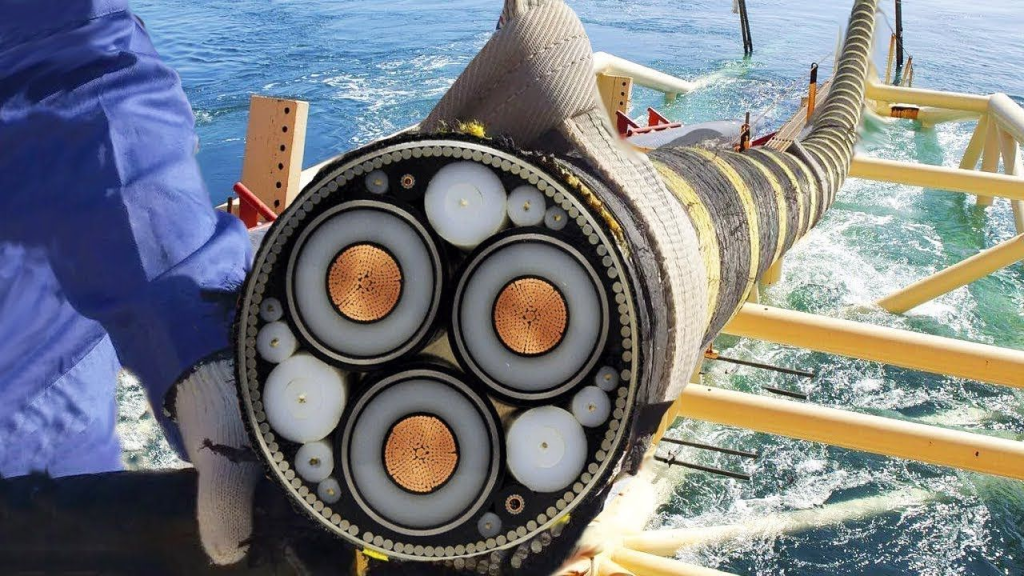
SolarDuck received its first Approval-in-Principle (AiP) in 2021 and launched its Merganser pilot (0.5 MW) in 2024. Platforms are moored to the seafloor and connected via cables to an onshore substation or battery systems. They are equipped with over 180 sensors to monitor wave response, structural loads, power output, and environmental impact in real time.
SolarDuck’s most notable projects include:
- Merganser Pilot (North Sea, Netherlands): 0.5 MW, installed 12 km offshore. Used for research in wave stability, sensor performance, and structural durability.
- Tokyo Bay Installation (Japan): 80–100 kWp system integrated with a 60 kWh BESS, powering electric boats and demonstration events.
- Hybrid Solar-Wind Project (Hollandse Kust West VII): A 5 MW offshore solar farm integrated with RWE’s wind turbines.
- Malaysia Demo Site (TNB Renewables): Exploring solar supply for remote islands and coastal settlements.
Floating solar technology offers several compelling advantages, particularly for maritime and remote island applications. Its maritime-resilient design ensures safe and stable operation even in rough sea conditions, making it suitable for deployment in a wide range of ocean environments. The modular scalability of the system allows for flexible implementation, from small installations for individual islands to large-scale utility parks. It is also compatible with hybrid energy setups, such as combining with wind turbines or battery storage systems, enhancing overall energy resilience. Additionally, the use of data-centric engineering enhances system reliability and helps reduce operation and maintenance costs. One of the most significant environmental benefits is its ability to lower greenhouse gas (GHG) emissions and decrease reliance on fossil fuels in isolated regions.
However, there exist several challenges to large scale deployment. The high upfront capital expenditure (CAPEX), particularly for mooring systems, underwater cabling, and marine-grade materials, opens the door for advancements in cost-efficient design and material engineering. Similarly, the logistical complexity of offshore maintenance highlights the need for improved remote monitoring technologies, predictive maintenance strategies, and innovative service solutions that can enhance operational efficiency and reduce lifecycle costs. Despite these challenges, continuous R&D and strong public-private partnerships are addressing technical barriers and driving cost reductions.
SolarDuck is at the forefront of a new frontier: transforming oceans into clean energy landscapes. With robust design, scalable deployment, and growing partnerships, its offshore floating solar platforms offer a resilient and sustainable power source. As the world shifts toward energy transition, SolarDuck is poised to shine… literally.
References:
Bureau Veritas. (2021, August 25). SolarDuck obtains AiP for floating solar technology. Offshore-Mag.
EnergyIndustryReview. (2023, February 23). SolarDuck: Pioneering offshore floating solar power.
Maritime Executive. (2023, December 21). SolarDuck secures funding to advance floating solar tech.
Offshore Energy. (2023, December 21). €15M boost to help SolarDuck deliver its first commercial floating solar projects.
PV-Tech. (2024, July 4). SolarDuck, RWE install offshore floating PV pilot in North Sea.
ScienceDirect. (2025). Economic feasibility of floating offshore solar farms. Applied Energy, 350.
MDPI. (2023). Prospects of solar energy in the context of greening maritime transport. Sustainability, 17(5), 2141.
SciePublish. (2024). Research Status and Development Trend of Floating Photovoltaic.
Contributor: Ariana Tri Asti
Reviewer : Imam Buchari, David Ratner


 Scorpa's Tech @ Sea
Leave a comment