As climate change, biodiversity loss, and industrial activities put growing pressure on marine ecosystems, the lack of high-resolution, in situ, and cost-effective monitoring tools hinders the ability of decision-makers to act with confidence and agility. Traditional solutions like buoys, satellites, and crewed research vessels are often expensive to deploy and maintain, limited in the depth and frequency of data they can collect, and unable to provide continuous real-time insights from beneath the ocean surface. These systems also require significant infrastructure and logistical coordination, which reduces flexibility and scalability, especially in remote or sensitive marine environments.
To address these critical limitations, Syrenna has developed a next-generation ocean monitoring platform that combines robotics, environmental sensing, and real-time data connectivity. Syrenna is a Norwegian deeptech startup that is transforming the landscape of ocean data monitoring through advanced robotics. Founded in 2022 in Oslo, the company was born out of a four-year research project at the OceanLab of Oslo Metropolitan University, under the leadership of Professor Alex Alcocer. With growing concern over the health of our oceans and the limitations of traditional monitoring systems like buoys, satellites, and research vessels, Syrenna introduced a more sustainable, flexible, and cost-efficient approach to environmental data collection. The company is led by co-founders Ester Strømmen (CEO), Becky Wightman (COO), and Alex Alcocer (CTO), each contributing unique expertise in environmental policy, business operations, and robotics respectively.

Source : https://www.syrenna.com/
The WaterDrone
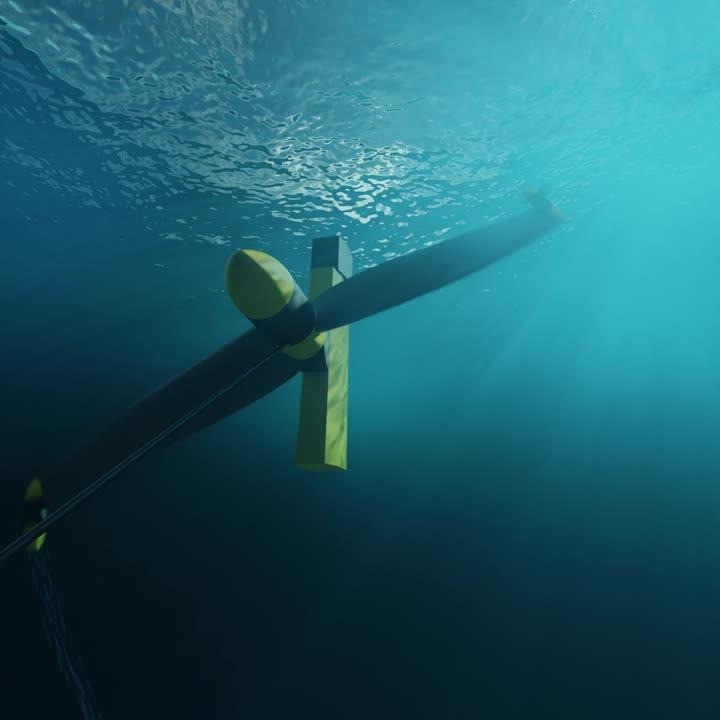
The heart of Syrenna’s innovation lies in its WaterDrone, an autonomous, vertically mobile ocean monitoring robot. Unlike conventional fixed-location buoys or deep-sea autonomous vehicles, the WaterDrone is moored to a location but able to travel vertically through the water column, from the surface to depths of up to 1,000 meters. It carries an array of environmental sensors that can be configured depending on the needs of the deployment, including sensors for:
- Temperature
- Salinity
- Dissolved oxygen
- pH and turbidity
- Microplastics
- Currents and wave activity
- Pollution or nutrient levels
The WaterDrone is sensor-agnostic and fully modular, meaning third-party sensors can be installed based on client requirements. Its durable build and year-long battery capacity allow it to be left unattended for months, gathering data as it autonomously performs vertical profiling, diving and surfacing repeatedly. The device communicates using 4G/5G networks or satellite uplinks, allowing real-time transmission of critical oceanographic data. Unlike satellite remote sensing, which is limited to surface-level observations, the WaterDrone collects in situ data from various depths, enabling researchers and environmental managers to build a much more accurate profile of ocean health.
What makes it even more competitive is the ease of deployment no need for large vessels or complex recovery operations. Its simple winch and mooring system means it can be deployed even from small boats. Additionally, with low maintenance requirements and cloud-based dashboards, users can remotely visualize and download data from anywhere in the world.
In 2023, Syrenna completed a pilot in the Oslofjord, in partnership with the Norwegian Institute for Water Research (NIVA) and the Institute of Marine Research (IMR). The WaterDrone was deployed to collect continuous data at depths of up to 180 meters. It performed vertical profiles several times a day, and real-time data transmission confirmed its resilience and operational accuracy in harsh marine environments. Results were deemed promising for long-term ocean observation, particularly in monitoring pollution, climate change impacts, and aquaculture sustainability.
Syrenna has currently raised just over $1 million through a mix of private and public investments to support their next phase of development. CEO Ester Strømmen shared that after this round, the company plans to raise a much larger amount, likely to start manufacturing their WaterDrone technology. The funds come from their early investor Antler, the ocean-focused accelerator Katapult, angel investor Harald Norvik (former CEO of energy giant Equinor), as well as grants from Innovation Norway, the Research Council of Norway, and the European Space Agency Business Incubation Center in Norway.
The strong mix of investors and grant funding reflects a shared belief in the importance of real-time, sustainable ocean monitoring.
Syrenna stands at the intersection of environmental sustainability, advanced robotics, and ocean science. Its WaterDrone technology addresses a major gap in global ocean data collection, providing a scalable, affordable, and reliable tool for environmental managers, scientists, and policymakers. As oceans continue to bear the brunt of climate change and industrial exploitation, innovations like Syrenna’s WaterDrone are critical to understanding and protecting marine ecosystems. The company’s successful pilots and strategic partnerships show promise for growth in sectors like aquaculture, offshore energy, research, and national marine surveillance.
Daftar Pustaka
- Syrenna. (2024). Official Website. Retrieved from https://www.syrenna.com
- Lunden, I. (2024, March 1). Syrenna’s WaterDrone is the ocean-monitoring ‘underwater weather station’ of the future. TechCrunch. Retrieved from https://techcrunch.com/2024/03/01/syrennas-waterdrone-is-the-ocean-monitoring-underwater-weather-station-of-the-future
- EU-Startups. (2024). Syrenna Company Profile. Retrieved from https://www.eu-startups.com/directory/syrenna/
- Antler Global. (2023). Portfolio: Syrenna. Retrieved from https://www.antler.co
- Katapult Ocean. (2024). Portfolio and Investment Thesis. Retrieved from https://katapult.vc/ocean
- European Space Agency Business Incubation Centre Norway. (2023). Startups Supported. Retrieved from https://www.esabic.no
Contributor : Dyah Ayuning Tyas
Reviewer : Imam Buchari, David Ratner

 Scorpa's Tech @ Sea
Leave a comment