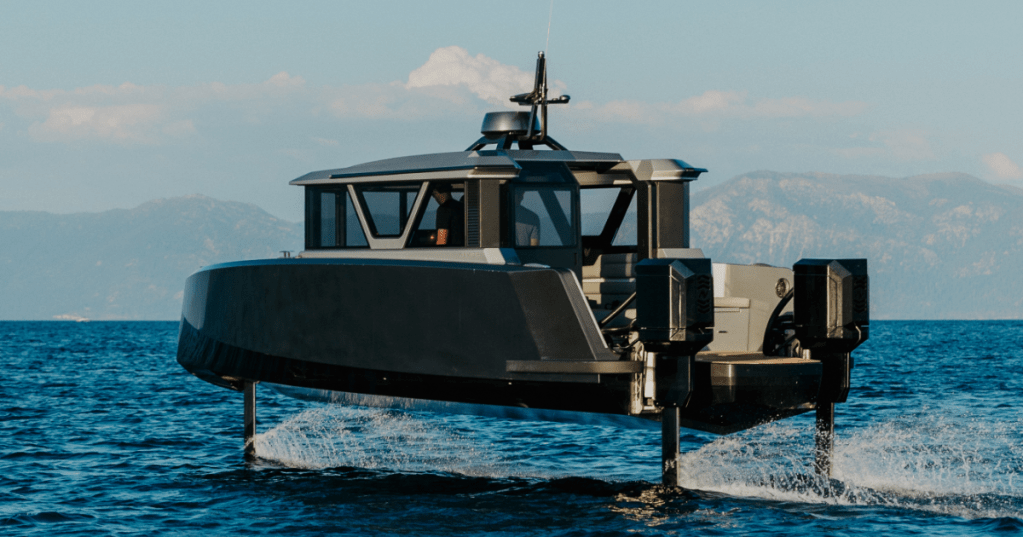
Image Credit: navierboat.com
Many coastal and seafaring operations are increasingly challenged by environmental concerns, operational cost, and efficiency. Traditional boats powered by combustion engines suffer from high fuel consumption, significant emissions (air, noise, and water pollution), and high maintenance costs. Hydrodynamic drag when pushing a hull through water causes energy losses, and rough seas degrade ride comfort (causing seasickness, safety issues), reducing speed efficiency and increasing wear.
Navier is tackling exactly these problems by combining hydrofoil technology, electric propulsion, advanced composites, and intelligent software control to create high-efficiency marine vessels. The technology aims to lift the hull out of the water once sufficient speed is achieved, thereby drastically reducing drag and increasing energy efficiency. The electric drive eliminates fuel-based emissions, noise, and much of the vibration. Altogether, the company claims to cut operating costs by up to 90% relative to typical gas-powered boats. The need for such technology is particularly important in coastal cities with congested land transport infrastructure, in ferry, water taxi or short haul maritime applications, defense or mission-critical uses where silent, efficient operations, speed, and reduced maintenance are key. Also, environmental regulations (for emissions, noise, wake) are increasingly stringent, pushing maritime transport towards cleaner solutions.
Founded in January 2021 by Sampriti Bhattacharyya, PhD, an MIT-trained mechanical engineer and former aerospace researcher, Navier was established alongside Reo Baird, a naval architect, and Kenny Jensen, PhD, a physicist specializing in control systems and autonomy. The founding team combines expertise in aerospace engineering, robotics, naval architecture, and advanced materials—bringing together the interdisciplinary capabilities required to design and scale hydrofoiling electric vessels. Their backgrounds across academia, aerospace research, and high-performance composites provide a strong technical foundation for maritime electrification and hydrodynamic innovation.
Navier has raised approximately US$35 million to date and is generating sales revenue from both transportation and defense sectors. The company has completed delivery of its first batch of boats, and its hydrofoiling electric technology is now integrated into U.S. defense vessels. Among its notable backers, Builders VC serves as the lead investor, joined by investors including Tim Draper, Balaji Srinivasan, Adam Draper, Will.i.am, Contrary Capital, and others. This capital has supported product development, production scaling, and commercial deployment, signaling strong investor confidence in Navier’s vision for sustainable maritime mobility. Navier is also included in the portfolios of several leading venture capital firms, such as NextView Ventures, Liquid2 Ventures, Soma Capital, Precursor Ventures, Treble capital, Drapper associates, F4 fund
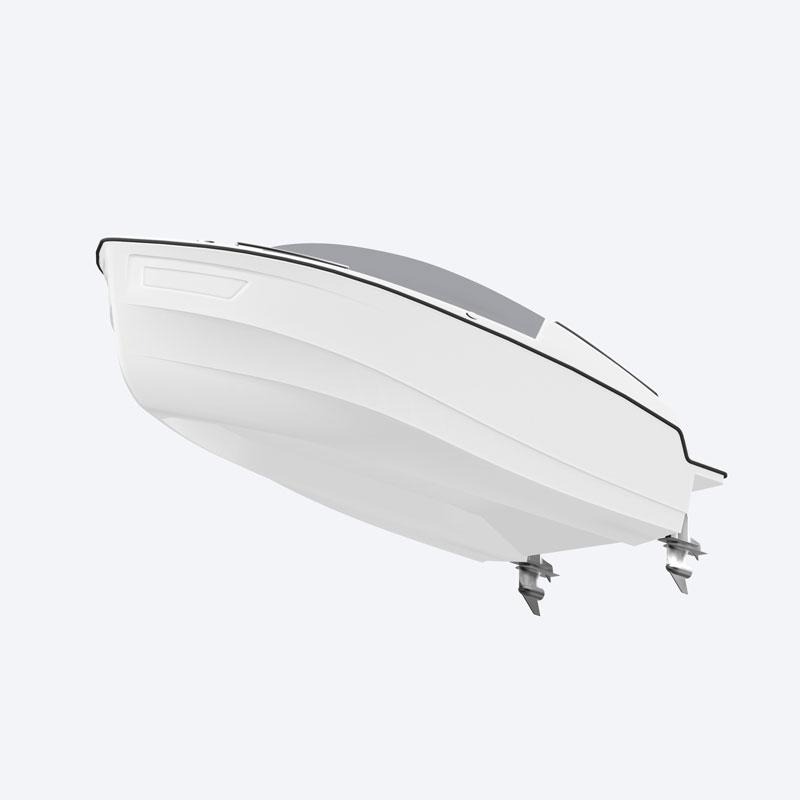
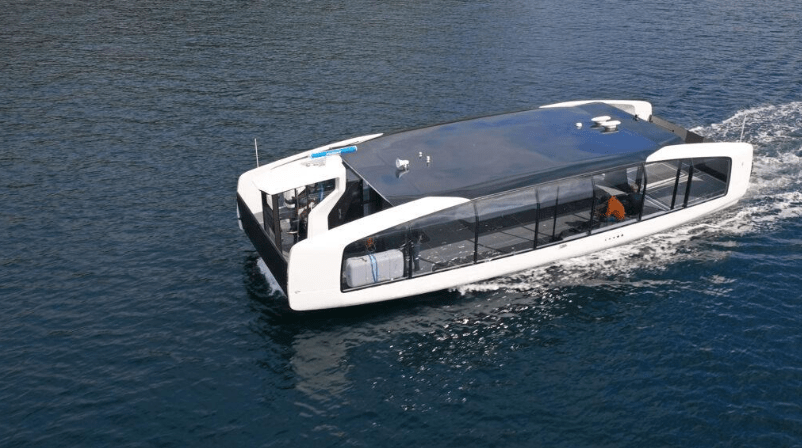
Navier’s flagship product, the N30 Pioneer Edition, is a 30-foot all-electric hydrofoiling vessel designed to deliver efficiency, comfort, and sustainability for a wide range of maritime users. Built from lightweight carbon fiber composites and equipped with retractable hydrofoils, the boat lifts above the water to drastically reduce drag by up to 90%, allowing for longer range, higher speeds, and smoother rides compared to conventional hull designs. The emissions-free propulsion is powered by high-capacity batteries that drive quiet electric motors, which also cut down on vibration and maintenance. To ensure stability and safety, the boat uses sophisticated flight control systems similar to those found in modern aircraft that automatically adjust the foils in real time to maintain balance, absorb wave impact, and enable smooth transitions between displacement and foiling modes. Retractable foil mechanisms allow for shallow water operations and docking flexibility, while redundant onboard systems reduce risk of failure.
Altogether, this integration of hardware and software creates a vessel that is cleaner, faster, quieter, and more reliable, meeting the growing demand for sustainable and high-performance maritime transport. For seafarers and companies, this translates into significant cost savings from reduced fuel use and maintenance, compliance with tightening environmental regulations, and improved operational reliability. Whether serving as a commuter ferry, water taxi, or leisure craft, the N30 offers a scalable solution that supports both economic efficiency and sustainable maritime practices.
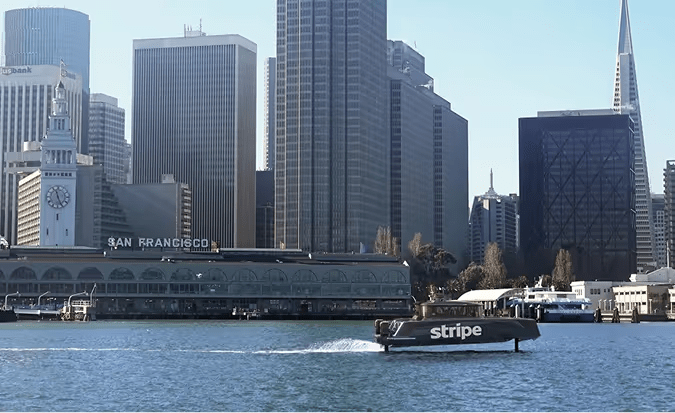
Image Credit: navierboat.com
Navier has also secured strategic partnerships and high-profile clients. In the luxury hospitality segment, resorts such as Four Seasons Hotels and Resorts are utilizing Navier’s vessels to provide premium, sustainable water transport experiences. In defense, the company’s technology has been adopted within U.S. defense programs, highlighting its suitability for endurance-driven and mission-critical maritime operations. These commercial and defense deployments validate the performance and scalability of Navier’s hydrofoiling electric platform.
Overall, Navier stands among the more advanced startups in maritime electrification, particularly through its focus on hydrofoiling to address drag losses and unlock extended range and superior efficiency. With US$35 million raised, completed vessel deliveries, revenue generation across transportation and defense sectors, and growing adoption in both luxury and mission-critical markets, the company is well positioned to influence the evolution of sustainable marine transport. While scaling production, regulatory navigation, and infrastructure development remain ongoing challenges, Navier’s technological maturity and market traction indicate strong long-term potential in reshaping coastal and maritime mobility.
References
Abbate, L. (2022, December 7). Navier’s 30-foot hydrofoiling electric boat hits the water and prepares for production. TechCrunch. Retrieved from https://techcrunch.com/2022/12/07/navier-electric-hydrofoil
Hawkins, A. J. (2022, February 7). Navier raises $7.2M to build high-tech electric hydrofoiling boats. The Verge. Retrieved from https://www.theverge.com/2022/2/7/navier-electric-hydrofoil-funding
Electrek. (2022, February 8). Electric hydrofoil startup Navier raises $7.2 million in seed funding. Electrek. Retrieved from https://electrek.co/2022/02/08/navier-7-2m-seed-funding
Yachting Ventures. (2022, February 8). Navier raises $7.2 million to develop next-generation electric boats. Yachting Ventures. Retrieved from https://yachtingventures.co/navier-raises-7-2m
Clay.com. (2025, May 2). Navier funding rounds and investors. Clay. Retrieved from https://clay.com/dossier/navier-funding
CSCP&G. (2025, July 21). Navier announces new customer expanding its portfolio of advanced maritime technology. CSCP&G Industry News. Retrieved from https://cscpg.org/industry-news/navier-new-customer
Navier. (n.d.). About Navier. Navier. Retrieved from https://navierboat.com/about
Contributor : Ariana tri asti
Reviewer : Imam Buchari, David Ratner
 Scorpa's Tech @ Sea
Leave a comment