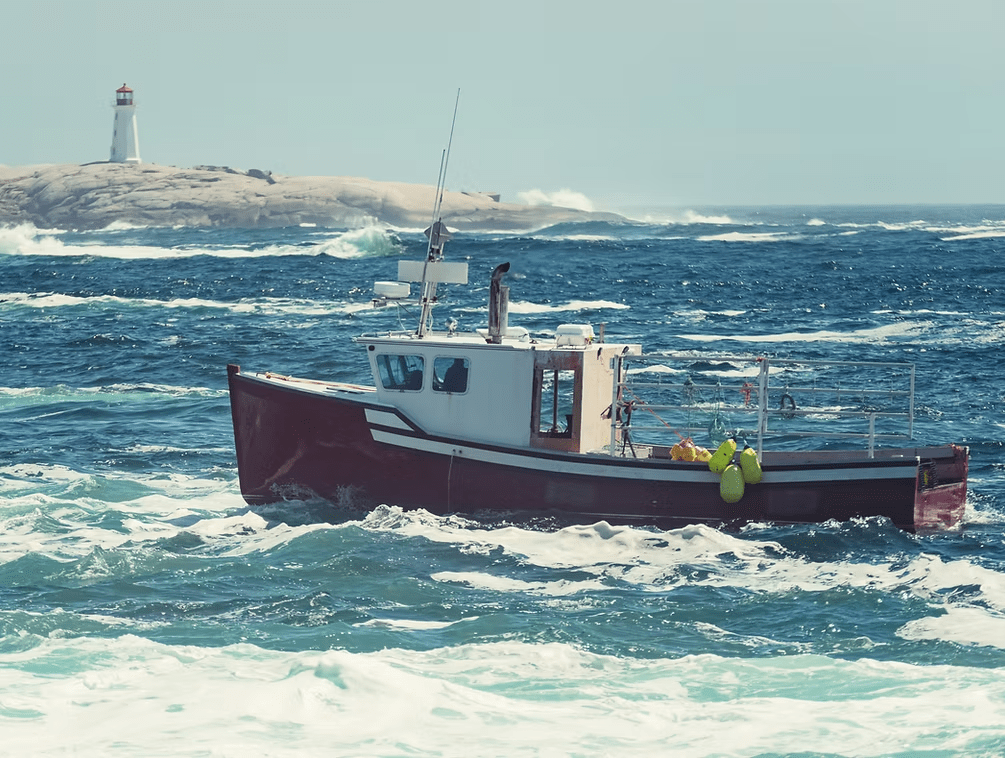
Image credit: glasoceanelectric.com
Small and medium-sized vessel operators face mounting pressure to cut emissions and fuel use while maintaining performance and reliability. Yet, replacing entire fleets with fully electric vessels is costly and often impractical. Many operators still depend on aging diesel systems that are noisy, inefficient, and increasingly non-compliant with new environmental standards. Glas Ocean Electric (GOE) bridges this gap with practical hybrid and electric conversion solutions, enabling vessels to reduce emissions and fuel consumption without sacrificing range or operational flexibility.
Glas Ocean Electric (GOE) was founded to address one of the most pressing challenges in the maritime sector, the need to reduce greenhouse gas emissions, fuel consumption, and harmful noise pollution from small to medium-sized vessels. Traditional diesel engines used in workboats, fishing vessels, and ferries contribute significantly to CO₂ emissions and pose health risks for crews exposed to noise and exhaust. With stricter global maritime regulations and rising fuel costs, the industry requires transitional technologies that balance efficiency with practicality. GOE’s solution lies in developing hybrid and electric conversion systems tailored to vessels under 50 tonnes, providing a pragmatic pathway toward decarbonization without demanding full fleet replacement.
The leadership of Glas Ocean Electric combines expertise in engineering, operations, and product development. At the helm is Dr. Sue Molloy, serving as Chief Executive Officer, supported by Dr. Aaron MacNeill as Chief Technology Officer and Tanya Harrietha as Chief Operating Officer. Their team also includes Dr. Juliano Franz, Director of Product Development, and Brad Purdy, Director of Engineering. Together, this group has steered the company from initial research into practical deployment, demonstrating both technological capability and commercial vision.
GOE’s portfolio is centered on two complementary offerings: the HyMarine™ electric conversion kit and the PerforMarine™ analytics platform. The HyMarine system enables hybrid propulsion through a modular 150 kW electric motor paired with a 98 kWh lithium ion battery, integrated into existing diesel-driven vessels. This system reduces fuel consumption by up to 70 percent while lowering noise and exhaust exposure for crews and passengers. PerforMarine adds a data driven layer, collecting sensor and environmental data to optimize propulsion decisions and provide performance analytics. Together, these tools not only improve vessel efficiency but also enhance crew well being, regulatory compliance, and long-term fleet management strategies.
The way Glas Ocean’s technology works can be explained through a combination of hardware and software. The HyMarine kit integrates directly into the propulsion system, allowing operators to switch between diesel, electric, or blended modes depending on operational needs. The electric motor and batteries provide quiet, emission-free operation during low-to-moderate loads, while the diesel engine ensures range and reliability during longer trips or heavy-duty work. Meanwhile, the PerforMarine system continuously monitors vessel performance and environmental factors, applying machine learning to recommend the most efficient operational modes. This approach ensures flexibility in various conditions, allowing seafarers to optimize fuel use, reduce costs, and extend the lifespan of both diesel and electric components. By deploying this technology on coastal fleets in Nova Scotia and beyond, GOE has demonstrated how hybrid propulsion can be both technically feasible and economically viable.
The advantages of Glas Ocean Electric’s approach are substantial. Operators benefit from reduced fuel expenses, fewer emissions, and improved working conditions for crews exposed to less noise and exhaust. The technology is designed for retrofitting, enabling widespread adoption without the need for entirely new fleets. The addition of advanced analytics further differentiates GOE’s solution by helping companies make smarter decisions at sea. However, challenges remain, particularly the high upfront costs of conversion, limitations of current lithium-ion batteries, and the complexities of certifying hybrid systems across diverse vessel types. Furthermore, the durability of electrical systems in harsh maritime environments must be proven over time, and widespread adoption depends on scaling production and service networks globally.
That said, real-world applications of GOE’s solutions are highlighting its promise. The “Sea Cucumber,” a hybrid lobster boat in Nova Scotia, has demonstrated up to six hours of electric-only operation and significant reductions in fuel use, noise, and emissions. Another landmark achievement was the conversion of the vessel Alutasi, which became the first Canadian boat to be approved by Transport Canada for lithium-ion battery propulsion. These projects are complemented by extensive data collection across more than 20 vessels over an eight-year period, forming a strong foundation for continued improvement and scalability. Such studies not only validate GOE’s claims but also provide confidence to fisheries, tour operators, and maritime companies considering adoption.
Partnerships and collaborations have been crucial in propelling Glas Ocean Electric forward. The company works with BAE Systems to source marine-rated components and has secured defense contracts through DARPA to develop advanced data acquisition systems. Transport Canada has provided regulatory validation, while Nova Scotia’s Fisheries & Aquaculture department has supported adoption through dedicated funding. GOE has also attracted investment and visibility through Ocean Zero and participation in Canadian innovation programs such as Innovative Solutions Canada. Together, these collaborations look set to ensure that GOE’s technology gains both technical credibility and commercial traction, reinforcing its role as a key player in the maritime energy transition.
References
Glas Ocean Electric. (n.d.). HyMarine Electric Conversion Kit. Retrieved from https://www.glasoceanelectric.com/hymarine
Glas Ocean Electric. (n.d.). About Us. Retrieved from https://www.glasoceanelectric.com/about-us
Glas Ocean Electric. (2024, April 6). Glas Ocean Electric announces major funding from Ocean Zero LLC to advance its unique CO2 reduction technologies. Retrieved from https://www.glasoceanelectric.com/post/glas-ocean-electric-announces-major-funding-from-ocean-zero-llc-to-advance-its-unique-co2-reduction
National Fisherman. (2024, July 15). Glas Ocean Electric innovation in hybrid lobster boats. Retrieved from https://www.nationalfisherman.com/glas-ocean-electric-innovation-in-hybrid-lobster-boats
PitchBook. (n.d.). Glas Ocean Electric Company Profile. Retrieved from https://pitchbook.com/profiles/company/517199-59
Entrevestor. (n.d.). Glas Ocean wins US defense contract. Retrieved from https://entrevestor.com/home/entry/glas-ocean-wins-us-defense-contract
 Scorpa's Tech @ Sea
Leave a comment