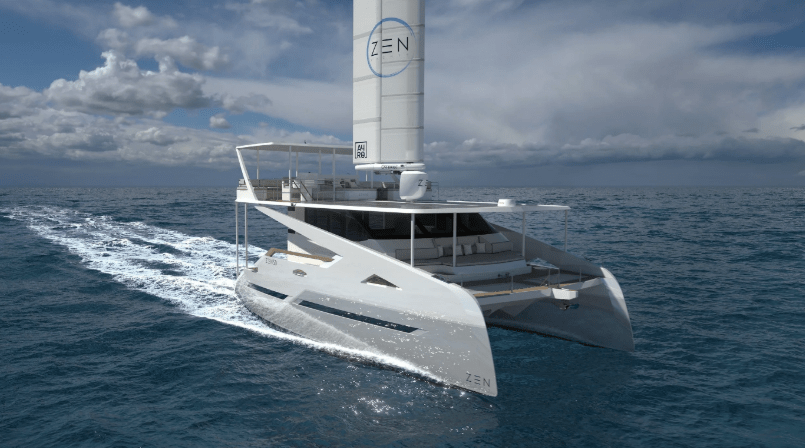
Image credit: oceanzerollc.com
Ocean Zero emerged in response to the urgent need for cleaner solutions in the maritime industry, which has proven itself one of the hardest sectors to decarbonize. Ships carry over 90 percent of global trade by volume and are responsible for nearly 600 million metric tons of CO₂ emissions annually, accounting for about 3 percent of global emissions. Much of this pollution comes from the widespread use of heavy fuel oil and outdated engines that release hydrocarbons, nitrogen oxides, and particulates into the air and water, contributing both to climate change and local pollution. With international regulations such as the IMO’s decarbonization strategy pushing the sector toward lower emissions, technologies that cut fuel use and greenhouse gases are increasingly needed. Ocean Zero positions itself as a venture fund dedicated to catalyzing these innovations by financing companies that are developing breakthrough technologies to make shipping and boating cleaner, safer, and more efficient.
The company was co-founded by Chris Anderson, known globally as the curator of TED Conferences and TED Talks, who also launched the TED Countdown initiative to accelerate climate innovation, and Stephen Petranek, a seasoned science and financial writer with editorial leadership experience at Discover Magazine, The Washington Post Magazine, and Breakthrough Technology Alert. Together, they combined Anderson’s global reach in idea dissemination with Petranek’s expertise in science communication and finance to create a focused investment vehicle aimed at the decarbonization of maritime transport. Their vision is to identify, finance, and help scale companies whose technologies can reduce marine emissions dramatically.
According to venture databases such as Nordic9, the firm averages close to USD $15 million per investment round, making about two deals per year. Its portfolio includes companies such as (based on company website):
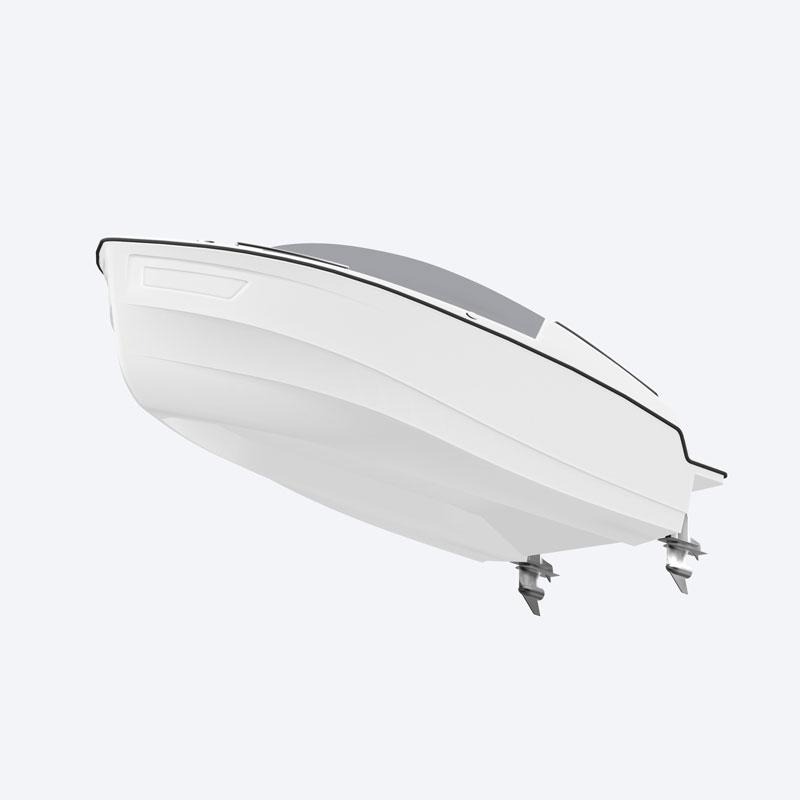
Candela: which builds electric hydrofoiling boats that reduce drag by 80 percent;
Oceanwings/AYRO: intends to retrofit such wingsails to hundreds of large commercial cargo ships and estimates wingsails can reduce fuel consumption by up to 50%.;
Flux Marine: which raised USD $15.5 million in a Series A round led by Ocean Zero in 2025 to scale its electric outboard motors;
Glas Ocean Electric: a Canadian company that secured USD $2 million in 2023 to expand its hybrid-electric retrofit systems;
Pascal Technologies: which develops air-lubrication systems to cut hull drag by nearly half;
BATENE: a German spinoff developing advanced lithium-ion battery fabrication methods;
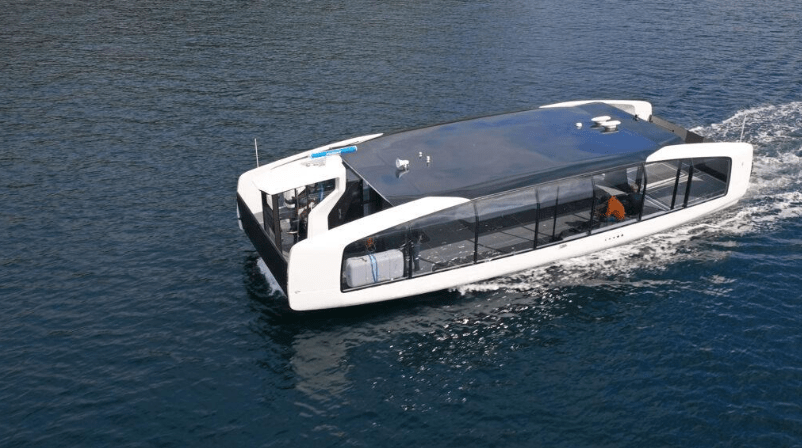
Hyke Smart City Ferries: which designs autonomous all-electric passenger ferries;
ZEN Yachts: which raised €5.5 million in 2023 from Ocean Zero to build solar-electric luxury catamarans.
These investments demonstrate how Ocean Zero spreads risk across different approaches, electric propulsion, drag reduction, wind assistance, and next-generation batteries, while supporting seafarers and companies with solutions that cut fuel costs, reduce emissions, and support regulatory compliance.
The technologies supported by Ocean Zero work by replacing or supplementing fossil-fuel combustion with renewable or efficiency-enhancing systems. Electric and hybrid drives reduce reliance on diesel by integrating battery-powered motors that can run during docking, low-speed operations, or when renewable energy sources like solar or wind are available. Hydrofoiling boats lift hulls above water to slash drag and energy consumption, making higher-speed electric transport viable. Air-lubrication systems inject micro-bubbles under hulls to create a cushion that reduces friction, requiring less engine power for the same speed. Rigid wingsails capture wind more efficiently than traditional sails, with computer-controlled settings to optimize propulsion and cut fuel use. Meanwhile, breakthroughs in battery technology improve energy density, charge rates, and safety, pushing electric solutions closer to viability even for larger vessels.
These technologies can be applied across harbors, coastal ferries, cargo routes, and even recreational boating, offering solutions for operators who need to meet emissions rules, reduce operating costs, or improve their environmental reputation.
Ocean Zero’s strategy looks to mitigate risk through a diversified technology portfolio that targets one of the most pressing global emissions sources, and offers scalable solutions that can retrofit existing vessels rather than requiring new builds. Its investments are well-aligned with tightening maritime regulations, and the technologies can deliver cost savings, quieter operations, and reduced maintenance over time.
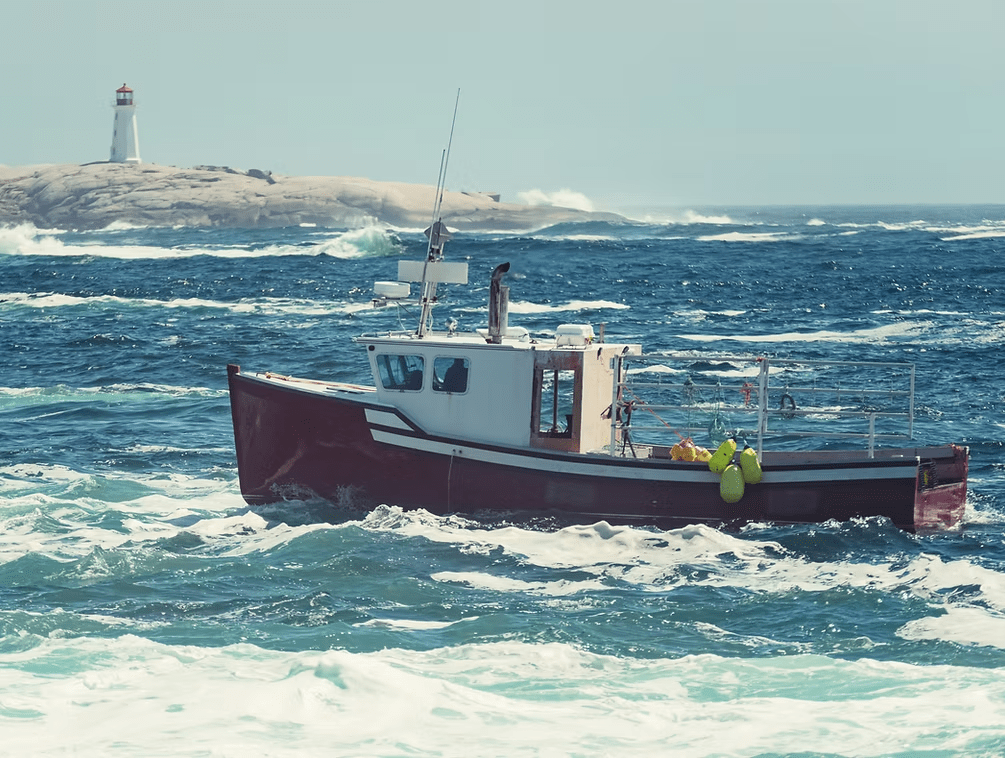
Several case studies highlight the impact of Ocean Zero’s investments. ZEN Yachts’ ZEN50, a solar electric catamaran with optional wingsails, demonstrates how renewable propulsion and energy storage can deliver zero emission luxury cruising, with early production units already ordered. Glas Ocean Electric shows how fishing vessels and ferries can be retrofitted with hybrid electric systems that cut emissions by up to 70 percent, supported by real time data analytics. Flux Marine illustrates the electrification of the outboard motor market, delivering quiet, clean, high performance propulsion for small and medium craft. These use cases also underline that Ocean Zero’s portfolio addresses multiple market segments, from luxury yachts to workboats to city ferries.
Partnerships play an important role in Ocean Zero’s impact. Its portfolio companies collaborate with governments, research agencies, and shipyards to bring innovations to market. Glas Ocean Electric works with DARPA and Innovative Solutions Canada to advance hybrid drive technologies. ZEN Yachts integrates AYRO’s OceanWings sails, creating synergy within the portfolio.
While Ocean Zero’s model lays the groundwork for broad adoption of its portfolio companies’ technologies. By combining financial backing, public advocacy, and technological diversification, Ocean Zero is building a strong ecosystem that is serving to accelerate the decarbonization of maritime transport globally.
References
Boating Industry Canada. (2023, October 24). Glas Ocean Electric announces major funding from Ocean Zero LLC to advance its unique CO₂ reduction technologies. https://boatingindustry.ca/current-news/glas-ocean-electric-announces-major-funding-from-ocean-zero-llc-to-advance-its-unique-co2-reduction-technologies
Electrek. (2023, March 1). ZEN Yachts secures $5.9M in Series A alongside new orders for its solar electric catamaran. https://electrek.co/2023/03/01/zen-yachts-series-a-funding-new-orders-solar-electric-catamaran/
GrowBlue. (2025, February 27). Flux Marine raises $15.5 million in oversubscribed Series A round to electrify marine outboards. https://www.growblue.org/blog/flux-marine-raises-155-million-in-oversubscribed-series-a-round-to-electrify-marine-outboards
Nordic9. (n.d.). Ocean Zero (investor – Corporate Investor). https://nordic9.com/companies/ocean-zero/
Ocean Zero LLC. (n.d.). Who we fund. https://www.oceanzerollc.com/who-we-fund
Ocean Zero LLC. (n.d.). Who we are. https://www.oceanzerollc.com/who-we-are
Renewable Energy Magazine. (2023, March 3). ZEN Yachts confirms Series A funding round. https://www.renewableenergymagazine.com/electric_hybrid_vehicles/zen-yachts-confirms-series-a-funding-round-20230303
RINA. (2023, July 3). Solar expeditions with the ZEN50 catamaran. https://rina.org.uk/industry-news/technology/solar-expeditions-with-the-zen50-catamaran/
Contributor : Ariana Tri Asti
Reviewer : Imam Buchari, David Ratner
 Scorpa's Tech @ Sea
Leave a comment