Image credit : altana.ai
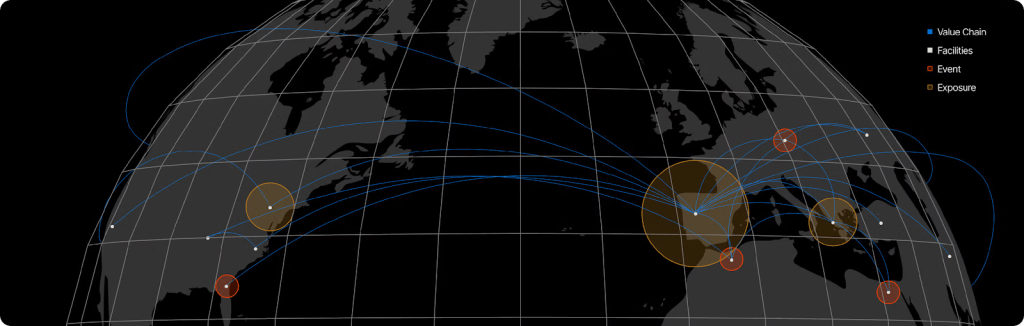
Global maritime logistics is under mounting pressure to adapt, facing geopolitical instability, forced labor enforcement, trade sanctions, and decarbonization mandates. Traditional supply chain tools are no longer sufficient. Maritime companies, freight forwarders, and regulators struggle with fragmented data, lack of real-time visibility, and inefficient manual compliance checks, leading to costly delays, shipment detentions, and reputational risks. In response, Altana AI, a U.S.-based startup, has built a platform that revolutionizes how maritime stakeholders manage risk, compliance, and visibility. Through advanced federated AI, Altana offers a global value chain map that connects billions of data points, bringing unprecedented intelligence to seafarers, logistics teams, and government regulators alike.
The maritime industry is responsible for transporting over 80% of global goods by volume. However, managing transparency and compliance across thousands of ports, shipping lines, suppliers, and cross-border regulations is a major challenge. For instance, new laws like the Uyghur Forced Labor Prevention Act (UFLPA) have forced companies to trace goods beyond Tier 1 suppliers. Meanwhile, carbon regulations demand end-to-end emissions tracking.
This fragmented, opaque ecosystem can delay shipments, increase risk, and raise costs for companies operating globally. Companies face daily pain points such as surprise customs holds, difficulties vetting new suppliers, and challenges proving ESG compliance to partners and investors. Altana AI addresses these issues by creating a shared source of truth, helping users navigate customs enforcement, supply shocks, and ESG goals without compromising sensitive internal data.
Altana AI was founded by four co-founders with deep expertise in AI, supply chains, and global trade:
- Evan Smith (CEO): An expert in sustainable logistics, previously involved in operational innovation across sectors.
- Peter Swartz (Chief Science Officer): Former head of data science at Panjiva with experience building trade-related AI models.
- Raphael Tehranian (COO): An entrepreneur with a background in cleantech and supply chain management.
Their shared vision create a federated, privacy-preserving AI platform that enables cooperation across governments, enterprises, and logistics partners to build trusted global commerce.
Altana has gained significant traction from both venture capital and strategic investors:
- Series A (Sep 2021): $15M led by GV (formerly Google Ventures). Floating Point, Ridgeline Partners, and existing investors Amadeus Capital Partners and Schematic Ventures joined the round, which closed in May 2021.
- Series B (Oct 2022): $100M led by Activate Capital, joined by OMERS Ventures participating alongside strategic investors Prologis Ventures, Reefknot Investments, and Four More Capital. Existing investors GV (formerly Google Ventures), Amadeus Capital Partners, Floating Point, and Ridgeline Partners all joined the round
- Series C (Jul 2024): $200MSeries C investment led by Thomas Tull’s US Innovative Technology Fund (USIT). The funding round included participation from March Capital, Generation Investment Management, Salesforce Ventures, Friends and Family Capital, and each of Altana’s key existing investors, including GV (Google Ventures), Activate Capital, Floating Point, and OMERS Ventures. The funding brings Altana’s valuation to $1 billion..
Altana’s platform centers on a Value Chain Management System (VCMS) a data fabric powered by federated AI. Altana ingests over 2.8 billion shipment records and data from more than 500 million companies and 850 million facilities worldwide. This allows it to visualize global supply networks down to each node port, vessel, or supplier without compromising privacy. Because seafarers and operators need to prove cargo compliance (with UFLPA or sanctions), estimate carbon emissions, and assess operational risks like route instability or port shutdowns. Altana enables real-time visibility from raw materials to delivery.
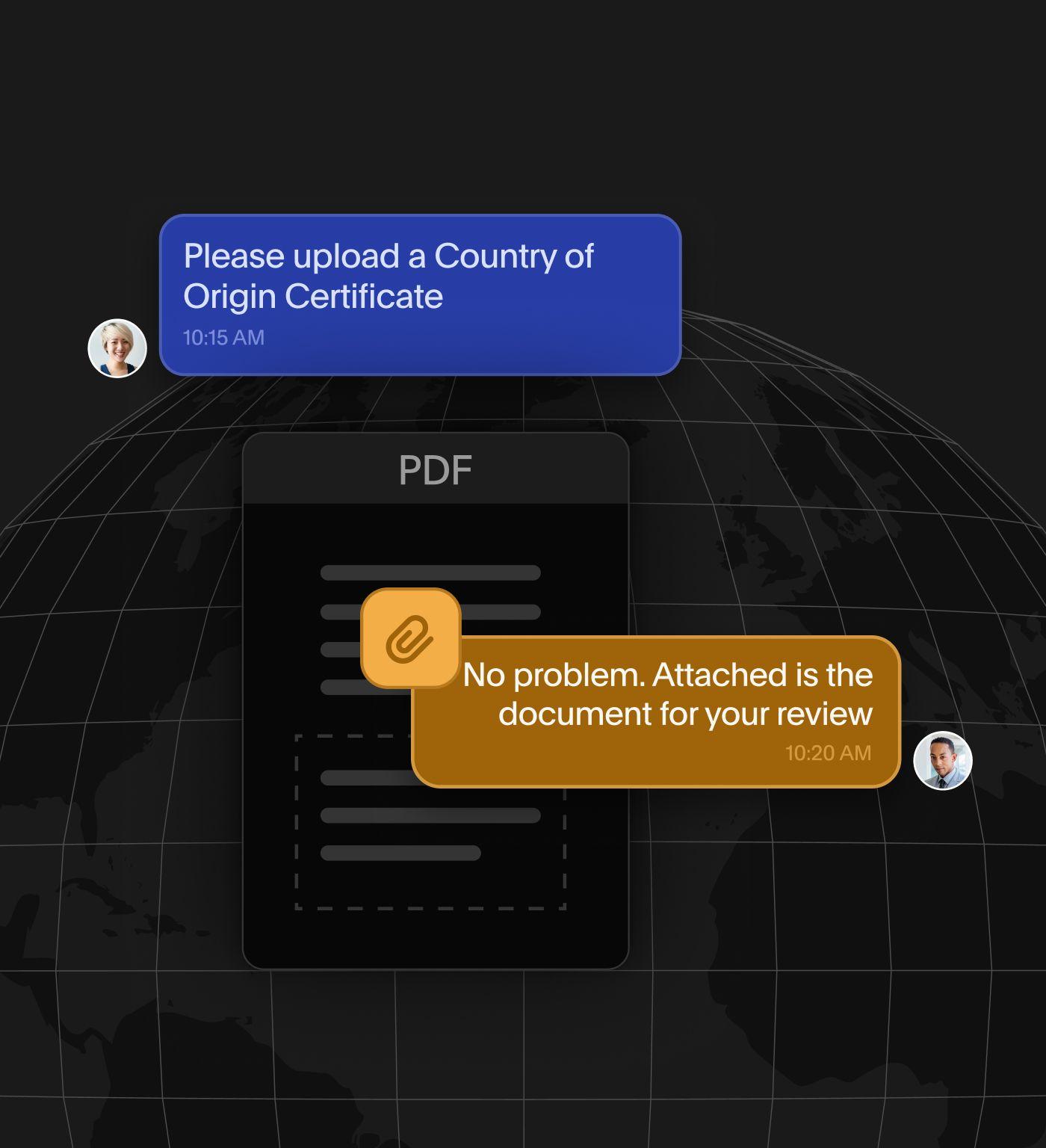
Image credit : altana.ai
The platform is used by major maritime and logistics stakeholders including Maersk, UPS, Lloyd’s, and multiple governments (U.S. Customs and Border Protection, UK Department for Business & Trade). Using federated AI, each partner (e.g., a shipping line or customs authority) contributes secure metadata (not raw data). Altana then uses this to train models that detect compliance risks, forced labor traces, carbon anomalies, and shipment irregularities delivering interactive alerts and scenario simulations to users.
The system operates across all stages of shipping from port-of-origin checks to mid-sea routing and final customs clearance triggering alerts as risk thresholds are breached or global events impact cargo.
Altana’s platform offers several advantages that set it apart in the maritime industry. It provides high-resolution insight, delivering 2-3 times more detailed shipment intelligence compared to traditional platforms. This level of detail helps operators make more informed decisions across their supply chains. The platform’s privacy-safe design, powered by federated learning, ensures that data remains decentralized, which is critical in a risk-sensitive and highly regulated sector. Its multi-use capability allows users to manage customs enforcement, track emissions, and vet suppliers all within a single, integrated interface.
Altana’s technology is actively used to detect forced labor routes for shipping companies such as Maersk, ensuring compliance with U.S. import bans; assist insurers like McGill & Partners in pricing premiums by mapping cargo risks; enable scenario planning to anticipate tariff or regulatory shifts; and support ESG compliance by tracing scope 3 emissions throughout supplier networks
Altana also partnered with Epoch Blue for agricultural shipping decarbonization, and its tools were used to track Russia’s acquisition of Western components during the Ukraine war, showcasing its value in geopolitical contexts.
Altana AI is rapidly emerging as a foundational platform in maritime and global logistics. With a unique federated AI approach and strong government, insurer, and industry adoption, it provides maritime companies with the clarity, compliance, and control they need in today’s uncertain trade landscape. As regulations tighten and supply networks grow more complex, technologies like Altana’s will become indispensable.
References
AlleyWatch. (2021). Altana AI raises $15M to bring unprecedented visibility to supply chain… AlleyWatch.
TechCrunch. (2022, October 6). AI‑powered supply chain visibility platform Altana bags $100M.
Business Wire. (2024, June 5). Altana introduces world’s first Value Chain Management System.
SiliconAngle. (2024, July 29). Altana raises $200M for its supply chain analytics platform.
Amadeus Capital Partners. (n.d.). Altana AI company page.
FreightWaves. (2024, July 30). Altana becomes FreightTech’s next unicorn…
Crunchbase News. (2024, August 5). Supply chain slowdown — funding plummets.
CTOL.digital. (2024, August 5). Altana AI’s $200M Series C funding…|
Contributor: Ariana tri asti
Reviewer : Imam Buchari, David Ratner

 Scorpa's Tech @ Sea
Leave a comment