
Image source: investinor.no
Investinor AS, venture capital powerhouse managing over NOK 8 billion ($740 million), is cementing its position as the financial cornerstone of the Nordic deep-tech pipeline. Operating from Trondheim under the authority of the Ministry of Trade, Industry and Fisheries, the fund acts as a critical market-maker. It injects patient capital into high-growth, capital-intensive industries that traditional venture capital often deems too volatile or complex.
By operating with a strict pari passu mandate requiring private institutional co-investors to match state funds, Investinor looks to de-risk early-stage ventures while steering them toward international scale.
Background: The Sovereign Growth Catalyst
Unlike traditional sovereign wealth funds that passively trade public equities abroad, Investinor operates directly within the trenches of the private venture ecosystem. Formulated as an independent commercial entity, the firm was engineered to leverage the Nordic region’s historical engineering strengths in maritime technology, clean energy, life sciences, and advanced industrial software.
By acting as a long-horizon financial anchor, the firm systematically bridges the notoriously brutal “valley of death” for deep-tech startups. It transforms highly localized innovations into globally competitive commercial giants, providing a critical buffer during macroeconomic shifts.
Founders’ Story: Commercializing the Elite Engineering Class
The foundation of Investinor’s strategy lies in backing highly specialized technical founders ranging from elite naval architects and semiconductor pioneers to ultrasound scientists and former music-tech executives. Formed in 2008 to build a sustainable, post-petroleum economy, Investinor’s team of veteran investment directors do not merely provide liquidity.
The firm’s operators take active board seats to help founders navigate through regulatory hurdles, international supply chain buildouts, and eventual cross-border M&A executions, effectively blending classic Nordic engineering grit with the fast-scaling playbook of global venture capital.
Portfolio: Granular Breakdown in the maritime, Energy & Cleantech Sectors
- Echandia Marine (Sweden): Co-founded by CEO Magnus Eriksson, a veteran naval architect whose technical background in heavy commercial ship design dictated the platform’s engineering. Backed by a cumulative $34 million (325 million SEK) funding runway, Eriksson’s team utilizes Lithium Titanium Oxide (LTO) modular systems to achieve ultra-fast 12C charging rates, allowing heavy-duty passenger ferries and tugboats to secure a full recharge during a standard 10-minute port stay.
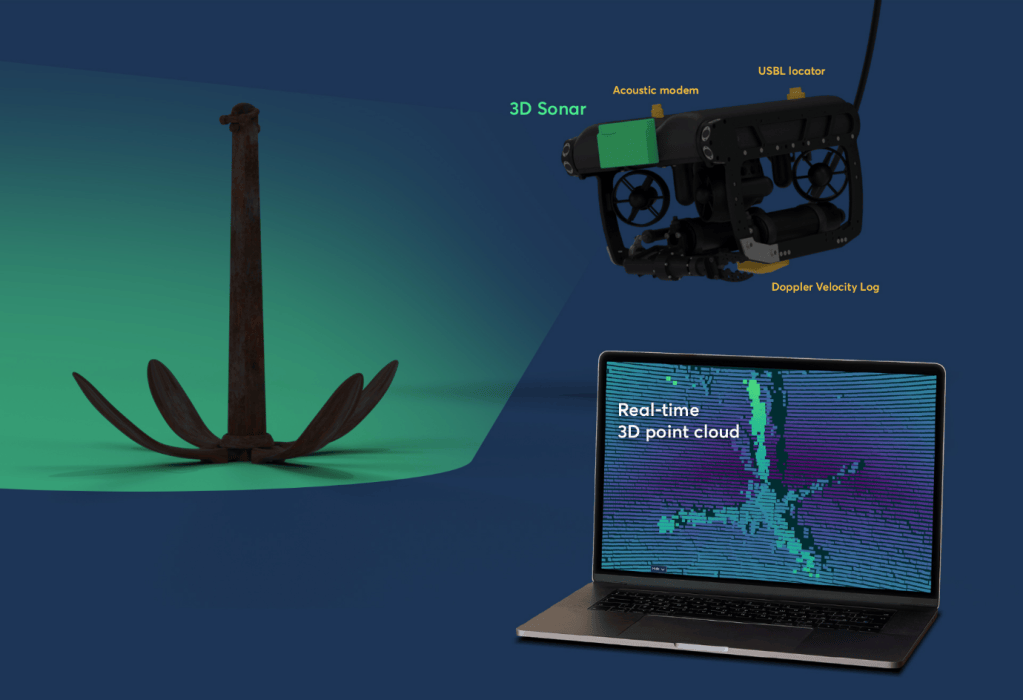
- Kongsberg Ferrotech: Developing advanced subsea robotic systems engineered to perform autonomous inspection, composite repair, and maintenance on subsea pipelines and oil/gas infrastructure.
- Heimdall Power: Produces industrial smart sensors (known as the “Magic Ball”) and machine learning software to monitor power grids in real time, dramatically increasing the capacity and safety of global electricity transmission lines.
- LayerOne: A highly specialized advanced materials manufacturer producing premium quality graphene and graphene oxide to optimize industrial manufacturing and clean energy hardware.
- Kebony: An environmental technology company producing high-quality, sustainable modified wood designed to match the durability of tropical hardwoods without destroying endangered rainforest ecosystems.
- Planktonic: An aquaculture tech innovator cultivating freeze-dried live feed (nauplii) to significantly boost the survival and growth rates of marine fish larvae in commercial hatcheries.
Final Thought
Investinor’s macro ledger reflects a highly disciplined, intellectual-property-first playbook. By backing deeply specialized operator-engineers like Magnus Eriksson and others, the state-owned fund insulates its portfolio from the volatile valuations of the consumer software sector.
The primary risk to Investinor’s model remains the lengthy R&D runways and intense upfront capital expenditure (CAPEX) required by deep hardware, semiconductor, and software innovations. However, as the energy transition forces critical heavy industries to digitize or risk regulatory obsolescence, Investinor’s strategic positioning is formidable. If the fund can continue leveraging its sovereign backing to sustain these enterprises through international production scaling, it will achieve its ultimate goal: converting Norway’s oil-derived wealth into a self-sustaining, high-tech industrial economy.
References
Anwar, S., Zia, M. Y. I., Rashid, M., Rubens, G. Z. d., & Enevoldsen, P. (2020). Towards Ferry Electrification in the Maritime Sector. Energies, 13(24), 6506. https://doi.org/10.3390/en13246506
Dall’Armi, C., Micheli, D., & Taccani, R. (2021). Comparison of different plant layouts and fuel storage solutions for fuel cells utilization on a small ferry. International Journal of Hydrogen Energy, 46(26), 13878-13897. https://doi.org/10.1016/j.ijhydene.2021.02.138
Investinor AS. (2025). Portfolio: Echandia Marine and the green maritime transition. Retrieved from https://investinor.no/en/portfolio/
Tracxn. (2026, April 11). Echandia – 2026 Company Profile, Funding & Competitors. Retrieved from https://tracxn.com/d/companies/echandia/



Leave a Reply