
Image credit: nysnoinvest.no/en/
Nysnø Klimainvesteringer, more widely known as Nysnø Invest, is a state-owned investment company headquartered in Stavanger, Norway, that was established in 2017 with a clear vision: to accelerate the transition to a low-emission society through strategic climate investments. One of the key sectors targeted by Nysnø is the maritime industry, a cornerstone of Norway’s economy and a significant contributor to global greenhouse gas emissions.
Shipping alone accounts for approximately 3% of worldwide CO₂ emissions, making decarbonization a crucial objective for achieving the 2050 net-zero targets set by International Maritime Organization (IMO). Nysnø addresses this urgent issue by investing in scalable clean energy solutions and digital technologies that can be applied directly to shipping operations, port infrastructure, and offshore logistics. Their investment strategy supports hydrogen production, offshore wind, solar power, and smart energy management systems, technologies that enable maritime companies to reduce emissions, improve operational efficiency, and comply with increasingly strict environmental regulations.
The company was founded under the initiative of Norwegian Ministry of Trade, Industry and Fisheries and Government of Norway as part of a national effort to support the green economy. Nysnø began its journey with NOK 400 million (about USD 38 Mio) in initial funding in 2017, received an additional NOK 700 million (USD 68 Mio) in 2020, and now manages over NOK 2.4 billion (USD 237 Mio) in capital as of 2023. Rather than acting solely as a funder, Nysnø positions itself as a catalytic investor — using its resources to attract and unlock additional private capital for climate projects. Through this mechanism, it helps emerging companies scale up clean technologies faster, bridging the gap between research, pilot projects, and real-world industrial applications. Its investment portfolio includes several key players that support maritime decarbonization, such as ZEG Power (hydrogen energy production), Otovo (solar platform), Eviny (offshore wind and electrification), and Heimdall Power (digital energy optimization systems).
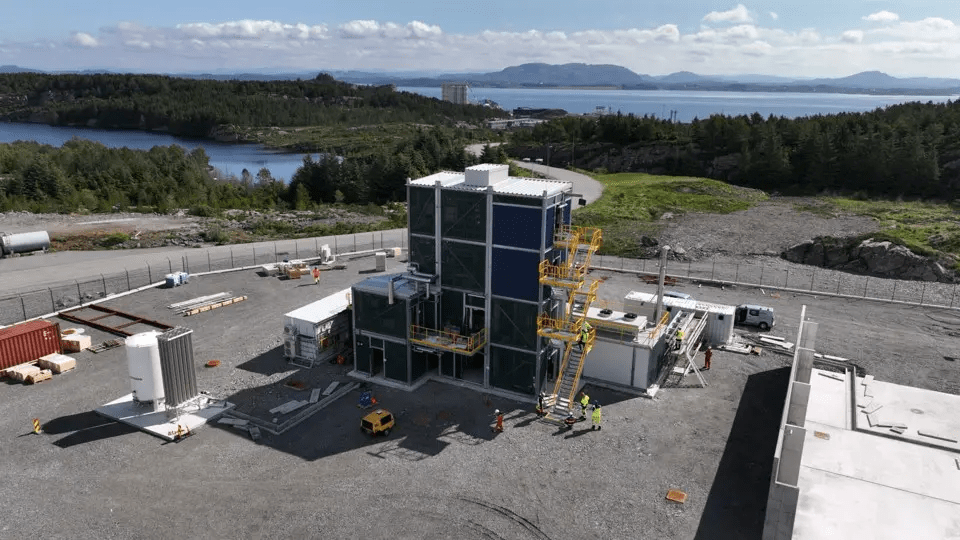
Image credit: zegpower.com
Portfolio
Nysnø Climate Investments has built a dynamic and impact-driven portfolio of companies working at the forefront of the global climate transition. While clean energy and maritime decarbonization are a focus, their portfolio also extends to sustainable agriculture and circular consumption; these companies reflect Nysnø’s commitment to scalable climate solutions that reduce emissions while fostering economic growth and innovation. Their portfolio includes :
- Nofence – Virtual fencing technology enabling farmers to practice rotational grazing
- Skagerak Capital – a leading Norwegian investor in climate technology and A
- Hystar AS – A leading Norwegian high-tech hydrogen company
- 44.01 – Permanent carbon removal through mineralization
- Flocean – Developing technology for subsea desalination
- Zinus – Driving a sustainable future for the maritime industry
- Maritime Robotics – Autonomous Vessels for a Sustainable Maritime Future
- Vixel – Reducing Emissions from the Construction Industry through Virtual Collaboration
- MoreScope – Data-Driven Solutions for Climate Footprint Reduction
- Aqua Robotics – provides automated and robotic net cleaning systems to the aquaculture industry.
- Metizoft – delivers leading software and services for a more sustainable maritime industry
- REEtec – has developed a new separation technology for environmentally friendly and efficient processing of rare earths elements that are used in growth markets within energy transition.
- Tise – a leading digital second-hand marketplace for apparel and interiors, with over 2.5 million users in the Nordics
- Vårgrønn – a Norwegian growth company driving the energy transition through the development, construction, operation, and ownership of offshore wind projects.
- Spoor AI – The Norwegian technology company Spoor AI develops software based on artificial intelligence to monitor and protect bird life at wind farms.
- Morrow Batteries – a Norwegian battery company with the goal of developing and producing the world’s most cost-effective and sustainable batteries.
- Ducky – a Norwegian climate technology company that develops digital tools to help consumers, businesses, and the public sector to reduce their climate footprint.
- Amina – a Norwegian EV charging company that was established in 2021 with the ambition of commercializing and selling a simple, safe and affordable EV charger.
- Heaten – a Norwegian heat pump technology company that develop low-carbon heat solutions for industrial applications.
- Casi – a Norwegian car subscription technology company enabling car fleet owners to create new and sustainable revenue streams by offering car subscription services.
- Torghatten – one of Norway’s largest transport groups and operates routes for ferries, express boats and buses throughout the country.
- Cenate – a Norwegian company that develops and manufactures a new type of silicon particles that can make today’s batteries better for tomorrow’s demand
- HIPtec – a Norwegian technology company that produces advanced metal components with reduced energy consumption and greenhouse gas emissions.
- Thorvald – the autonomous robot paving the way for sustainable agriculture
- Energy Impact Partners – a global venture investment platform investing in companies and technologies in the energy and utilities sectors that also offers solutions for solving the climate crisis. The unique investment platform acts as an innovation community and facilitates cooperation between investors and the energy sector
- ZEG Power – a Norwegian hydrogen company offering a new and revolutionary technology for effective production of hydrogen with integrated carbon capture.
- NorSun – a Norwegian solar energy company that produces highly efficient monocrystalline silicon wafers for the global solar energy industry.
- eSmart Systems – a Norwegian technology company that develops systems and software for utility companies based on artificial intelligence, including for automatic detection of components and faults in the power grid.
- Otovo – On a mission to put solar panels and batteries in every home in Europe.
The common thread running through these investments is an unwavering commitment to substantially reducing greenhouse gas emissions. Add to that a focus on scalability of technologies that can have a meaningful impact and we start to see the importance Nysnø places on ventures that can make a difference in the fight against climate change.
Specifically with regards to the maritime sector, Nysnø has formed strategic collaborations with European Investment Bank and Maritime CleanTech players, as well as several major port authorities and energy companies. These partnerships enable the scaling of green maritime technologies beyond Norway’s borders, influencing global shipping operations. By combining capital investment, innovation, and collaboration, Nysnø Invest plays a vital role in shaping a cleaner, smarter, and more sustainable maritime industry for the future.
Final Thought
Like a lighthouse guiding ships toward safer waters, Nysnø Invest operates as a beacon for the maritime industry’s clean transformation. The green transition at sea is not merely a technological shift but a profound reimagining of how humanity moves across the planet. While challenges remain, Nysnø’s ability to mobilize capital, accelerate commercialization of breakthrough solutions, and foster cross-industry collaboration ensures this momentum does not stall. Every hydrogen molecule produced, every battery optimized, every vessel plugged into clean power represents a step closer to an ocean economy aligned with climate goals. As ports and shipping lines worldwide chart their net-zero course, Nysnø’s portfolio stands as proof that innovation and sustainability can sail in the same direction, propelling the maritime sector toward a resilient and low-emission future.
References (APA Style)
- Nysnø Invest. (n.d.). About Nysnø. Retrieved from https://nysnoinvest.no
- European Investment Bank. (2023). Green Investment Partnerships. Retrieved from https://www.eib.org
- ZEG Power. (2023). Hydrogen Technology for Maritime Applications. Retrieved from https://zegpower.com
- Otovo. (2023). Solar Energy Solutions for Ports. Retrieved from https://otovo.com
- Heimdall Power. (2023). Smart Grid Optimization. Retrieved from https://heimdallpower.com
- Eviny. (2023). Offshore Wind and Electrification Projects. Retrieved from https://eviny.no
- International Maritime Organization. (2023). IMO GHG Strategy 2050. Retrieved from https://www.imo.org



Leave a Reply