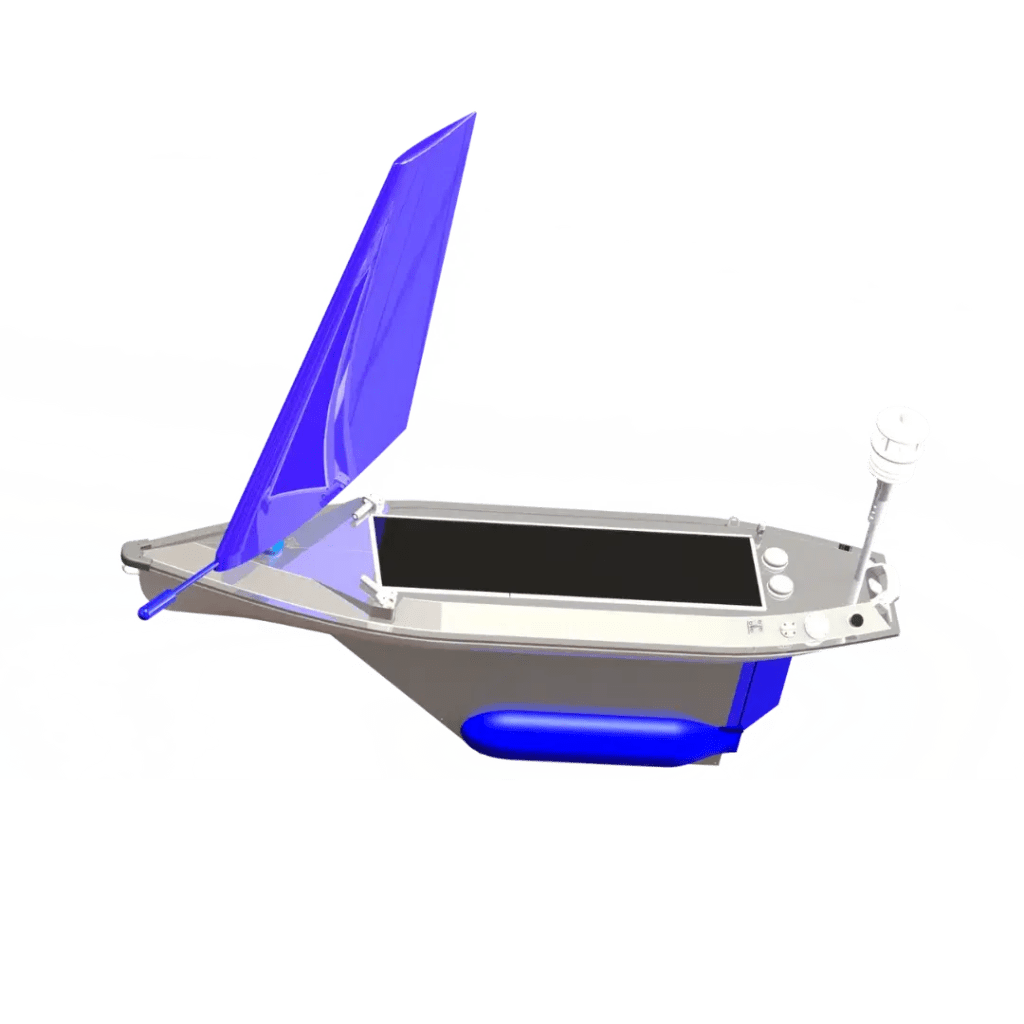
Image Credit: sailbuoy.no
In the maritime industry, collecting accurate ocean and weather data often means sending costly research vessels into remote or harsh environments risking crew safety, burning large amounts of fuel, and limiting how long missions can last. Traditional buoys and manned surveys can’t provide the continuous, wide-area coverage modern ocean operations demand. That’s where Offshore Sensing AS steps in. Their product, Sailbuoy, is a fully autonomous, wind-powered ocean drone that collects real-time meteorological and oceanographic data without the need for crewed ships. By harnessing wind for propulsion and solar power for electronics, Sailbuoy offers a safer, greener, and more cost-effective way to monitor the oceans year-round even in the world’s most challenging waters.
Developed by Offshore Sensing AS, a Norwegian company founded in 2014 by David Peddie as a spin-off from Christian Michelsen Research (CMR), the Sailbuoy can collect meteorological and oceanographic data over long durations and vast distances. The innovation addresses a persistent challenge in maritime research: traditional ocean observation relies heavily on expensive, crewed vessels and moored buoys that are limited in coverage and risky to deploy in harsh environments. Sailbuoy’s technology offers a sustainable alternative: a small, unmanned surface vehicle (USV) powered by wind for propulsion and solar energy for electronics, capable of operating autonomously for up to 12 months. This makes it invaluable for continuous monitoring in remote seas, Arctic waters, and offshore energy sites, where real time environmental data are essential for safe operations and scientific understanding.
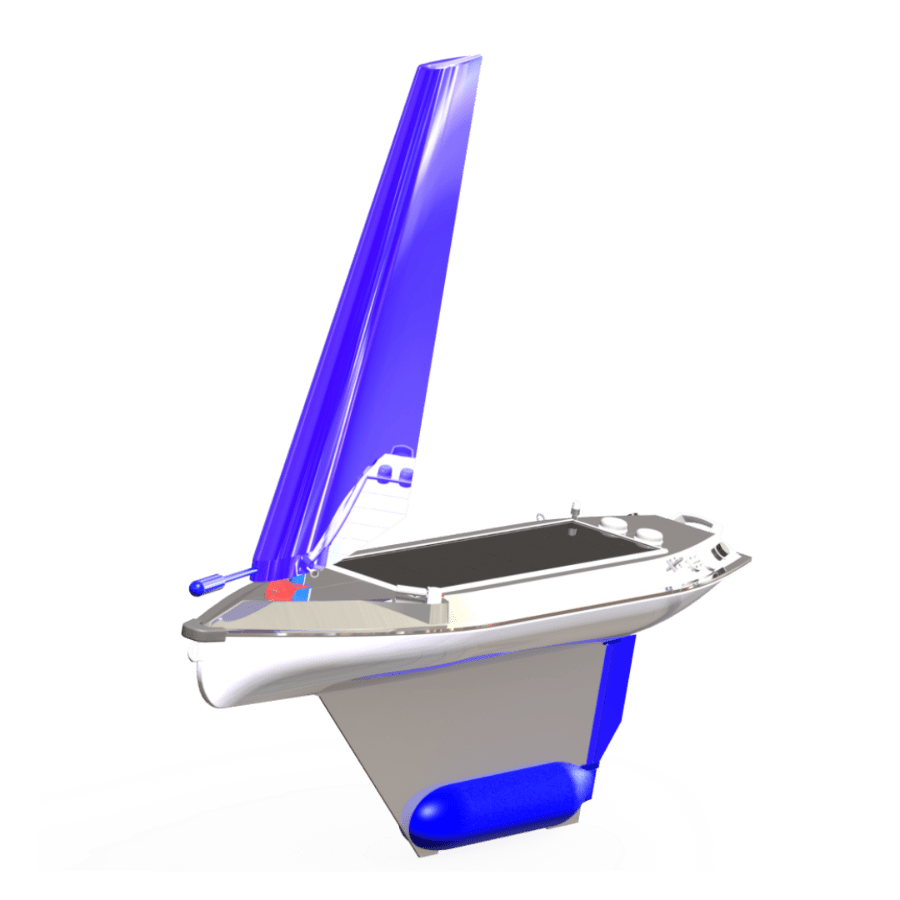
Image Credit: sailbuoy.no
How Sailbuoy works is both elegant and robust. The two-meter-long vessel uses a vertical sail for propulsion and solar panels to power its onboard electronics. It navigates autonomously between GPS-defined waypoints, adjusting its heading with a wind-adaptive rudder system and communicating continuously via the Iridium satellite network. Its modular payload bay supports sensors for temperature, salinity, oxygen, CO₂, ADCP current profiling, and even environmental DNA (eDNA) sampling. The system can be launched and recovered by small vessels, making it practical for nearshore and offshore missions alike. In maritime contexts, Sailbuoy serves as an uncrewed data sentinel, replacing costly manned survey missions and reducing operational CO₂ emissions. Offshore Sensing estimates that Sailbuoy operations avoid over 4,000 tons of CO₂ emissions compared to equivalent ship surveys.
The technology’s advantages are clear: long endurance, renewable energy operation, low maintenance, and real time global communication. It significantly reduces risk to human crews and provides data continuity in extreme weather conditions. However, limitations include relatively low speed (1–3 knots), dependence on wind for propulsion, and restricted payload capacity (~15 kg). Despite these constraints, peer-reviewed studies (e.g., Wullenweber et al., 2022, Sensors) confirm that Sailbuoy delivers reliable upper-ocean current measurements comparable to those obtained by traditional moorings. Real world use cases include a 2018 trans Atlantic mission from Newfoundland to Ireland (5,100 km in 80 days), continuous current profiling in the North Sea, and environmental monitoring projects with institutions such as PLOCAN in the Canary Islands. Recent collaborations also include a partnership with the University of Exeter for CO₂ flux sensor integration under the EU Horizon Europe “GEORGE” project, and a 2025 distribution agreement with Hydro Systems Development Inc. to expand Sailbuoy’s presence in Japan.
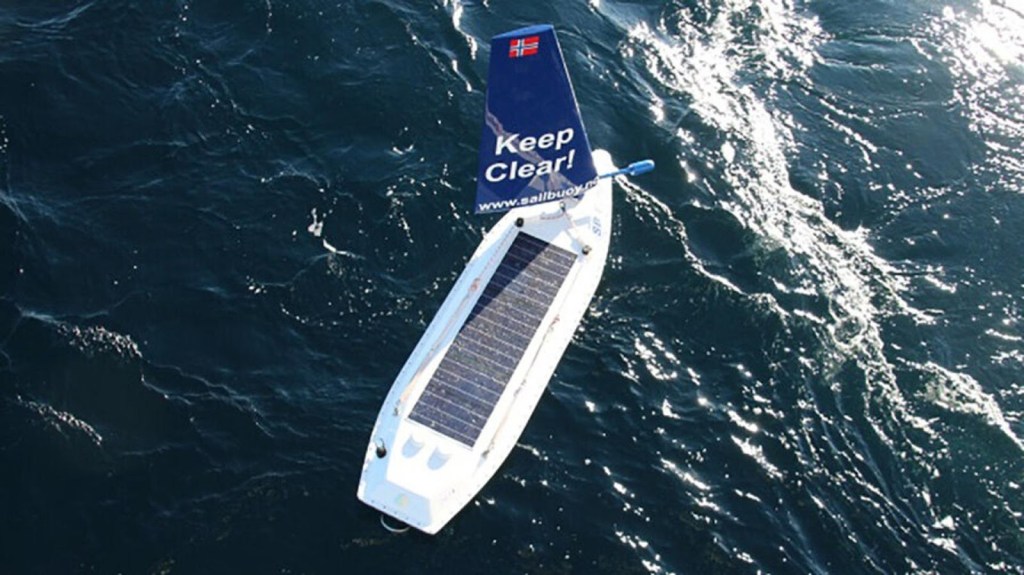
Image Credit: businessnorway.com
Through these advancements, Sailbuoy exemplifies the next generation of autonomous maritime observation systems: resilient, energy independent, and capable of democratizing access to ocean data. Whether supporting offshore wind farms, marine scientists, or environmental agencies, Sailbuoy’s integration of wind, solar, and satellite technologies marks a decisive step toward safer, smarter, and more sustainable ocean operations.
Offshore Sensing received venture support from Sarsia Management AS, a Norwegian investment group specializing in ocean technology start-ups. Although the exact funding amounts have not been publicly disclosed, Sarsia lists Offshore Sensing among its active portfolio, highlighting confidence in the scalability of Sailbuoy’s applications. Sailbuoy’s product line includes models such as SB Bio, SB Comms, SB Echo, SB eDNA, and SB Met, each tailored for specific maritime needs, from current and wave monitoring to eDNA collection and offshore communication relay. For seafarers and maritime companies, Sailbuoy provides a low-risk, low-cost solution for real-time ocean data, which can enhance offshore operations, route planning, and environmental compliance.
Final Thoughts
As the demand for accurate, real-time ocean data continues to grow across industries, from offshore energy to climate science, Sailbuoy stands out as a pioneering solution that redefines how the world observes and understands the sea. By combining renewable wind and solar energy with autonomous navigation and advanced sensing technology, it not only reduces operational costs and carbon emissions but also expands access to vital ocean intelligence. Offshore Sensing AS has demonstrated that sustainable innovation and maritime resilience can go hand in hand paving the way for a future where ocean monitoring is safer, smarter, and truly sustainable.
References
Ghani, M. H., et al. (2014). The SailBuoy remotely-controlled unmanned vessel: Measurements of near-surface temperature, salinity and oxygen concentration in the Northern Gulf of Mexico. Methods in Oceanography, 10, 104–121. https://doi.org/10.1016/j.mio.2014.09.001
Wullenweber, N., et al. (2022). SailBuoy Ocean Currents: Low-Cost Upper-Layer Ocean Current Measurements. Sensors, 22(15), 5553. https://doi.org/10.3390/s22155553
Offshore Sensing AS. (2025, July 7). Partnership with Hydro Systems Development to Expand Presence in Japan. https://sailbuoy.no/news/partnership-with-hydro-systems-development-to-expand-presence-in-japan
Offshore Sensing AS. (2025, Feb 3). University of Exeter & Offshore Sensing Collaborating for Better Ocean Observations. https://sailbuoy.no/news/ocean-observations
Sarsia Management AS. (n.d.). Portfolio: Offshore Sensing. https://sarsia.com/portfolio/offshore-sensing
Maritime Technology News. (2018). Sailbuoy Takes the Atlantic. https://www.marinetechnologynews.com/news/sailbuoy-takes-517449
Contributor : Ariana Tri asti
Reviewer : Imam Buchari, David Ratner


Leave a Reply