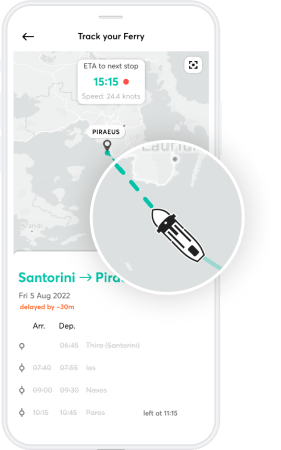
Image credit: ferryhopper.com
For decades, the maritime passenger transit industry was plagued by extreme structural fragmentation. While commercial aviation and rail networks long ago digitized into streamlined, global distribution ecosystems, the ferry sector remained trapped in a pre-internet operational model. Travelers looking to navigate the complex island networks of the Greek Cyclades, the Spanish Balearics, or the Italian coast were forced to manage conflicting timetables, navigate untranslated operator portals, and manually construct indirect itineraries.
To resolve these logistical bottlenecks, Athens-based mobility scale-up Ferryhopper has transformed maritime travel by converting isolated vessel voyages into an interconnected network graph solved programmatically via proprietary cloud routing software. The platform functions as a critical digital infrastructure layer for the maritime transport market, replacing chaotic physical port ticket booths with unified digital check-ins while unlocking a massive global distribution channel for regional ferry operators.
The Capital Stack & Institutional Injections
Ferryhopper’s international expansion and continuous algorithmic optimization have been fueled by a series of structured venture capital injections, amounting to approximately $8.88 million in total funding:
- Seed Round (April 2019): Raised €600,000 led by Greece-based Metavallon VC, with strategic co-investment from Sir Stelios Haji-Ioannou’s easyGroup.
- Series A Round (March 2021): Secured €2.6 Million ($2.93 million) led by Sofia-based LAUNCHub Ventures, with continued participation from existing backers Metavallon VC and easyGroup.
- Series B Round (June 2022): Concluded a €5.0 Million ($5.29 million) financing round led by London-based marketplace specialist Piton Capital, alongside LAUNCHub Ventures and Metavallon VC.
Team Structure & Algorithmic Mandate
Ferryhopper was founded in Athens in 2016 by a highly technical core team with deep competencies in data science, software engineering, and product development:
- Christos Spatharakis (Chief Executive Officer): Drives the company’s international expansion strategy, B2B enterprise positioning, and corporate financing rounds.
- Panagiotis Sarafis (Chief Product Officer): Directs product architecture, UI/UX optimization, and mobile application scaling.
- Aiden Short & Vasileios Lahanas (Co-founders): Lead core engineering frameworks, API integrations, and graph-routing development.
Frustrated by the artificial barriers to sea travel, this core team set out to handle the volatile variables of maritime transit mathematically. By treating complex coastlines as an interconnected data matrix, the team engineered a scalable platform capable of mapping indirect oceanic paths instantly.
The Core Product: Graph Routing Engine
Ferryhopper’s core product portfolio consisting of its web-based booking engine and native mobile application that reconciles highly fragmented maritime data into a single, cohesive transactional interface.
The system integrates highly diverse Global Distribution Systems (GDS) and individual operator APIs into a proprietary, multi-segment graph routing algorithm running on distributed cloud servers. This architecture ingests disjointed data feeds from over 110 independent legacy ferry operators, passing it through cloud-based multi-segment servers that compute real-time layovers, cabin availability, and fluctuating costs. The output is delivered to the consumer as a streamlined, single-payment booking that automatically generates digital QR e-tickets.
During peak travel seasons or sudden weather disruptions, the engine instantly maps alternative multi-operator schedule combinations, providing unmatched transparency and routing options to commuters on the high seas.
Strategic Alliances & Distribution Footprint
To achieve a dominant distribution footprint, Ferryhopper has executed major technical integrations with both localized fleets and global travel networks:
- Enterprise Multi-Modal Integration: Digital travel giant Omio integrated Ferryhopper’s entire Mediterranean maritime inventory directly into its global framework, exposing ferry routes to millions of rail and air commuters.
- White-Label Frameworks: The company secured a major validation of its backend tech by powering easyFerry.com under a white-label partnership with easyGroup.
- Fleet Penetration: The platform maintains direct API connections with over 110 major maritime operators, including Blue Star Ferries, SeaJets, Moby Lines, Balearia, and Norway’s premier green operator, Color Line.
Final Thought
Ferryhopper has successfully digitized maritime travel by turning the chaotic mess of ferry timetables into a clean, unified database. While the platform remains vulnerable to third-party fleet delays, its ability to streamline port logistics and combine multiple operators into a single click creates clear financial and operational value in a massive travel market that was been starved for tech modernization up until now.




Leave a Reply