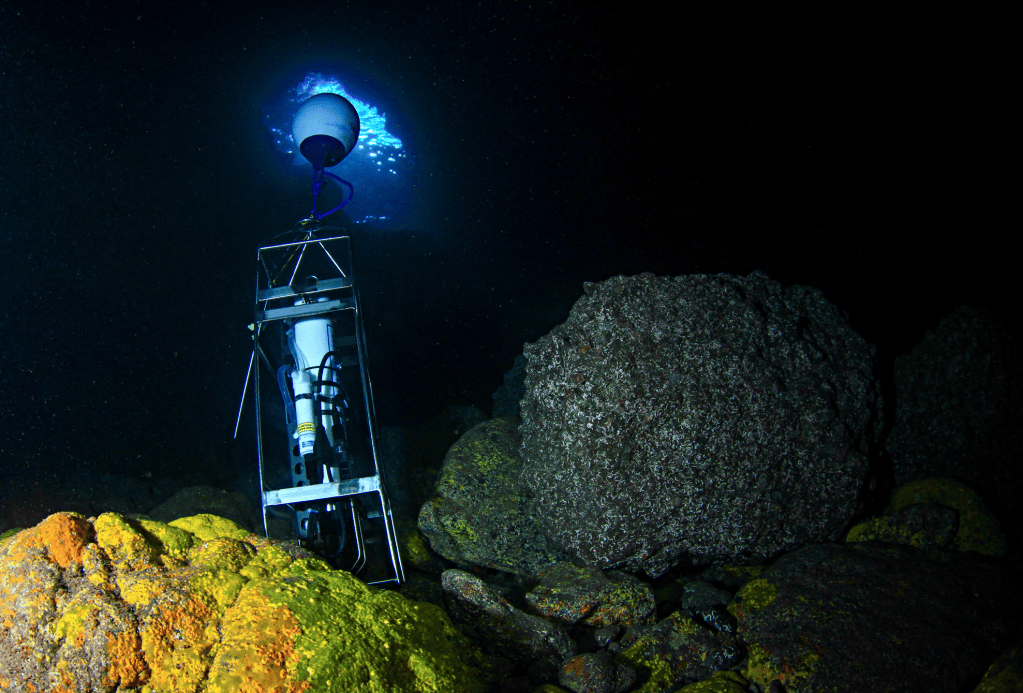
sources : https://osac.no/
Beneath the surface of the world’s oceans lies a data “black hole” that costs the global fishing industry billions in lost gear, fuel, and operational downtime. Because traditional radio waves die almost instantly in salt water, subsea assets have historically remained entirely cut off from the digital grid.
Ocean Space Acoustics (OSAC), a deep-tech spin-off from SINTEF, one of Europe’s largest independent research organizations, is betting that the physics of sound can bridge this gap. Founded in 2018, the Trondheim-based firm has commercialized a patented hydro-acoustic communication system designed to replace blind maritime operations with real-time, under-the-surface data streams.
The Team: Driving Commercialization and Autonomy
The company’s push from laboratory research to international market execution is led by a management team focused on scaling advanced hydroacoustics into a global standard. OSAC is led by CEO Håkon Skjelten, who is steering the company through its critical growth phase as its underlying technology transitions to a fully scaled market solution.
To convert this underlying technical breakthrough into immediate market adoption, Skjelten is supported by a specialized team managing the commercial frontline. Kristin Collier Valle, heading Sales and Marketing, is tasked with driving the international deployment of the firm’s sensor network among commercial fleets and maritime enterprises. On the deployment front, Lars Vegard Slettemark manages Technical Support, ensuring the ruggedized transponders interface seamlessly with complex vessel infrastructures. Together, this operational core is actively expanding the firm’s reach by connecting its robust sensor hardware with the broader robotics, fishing, and autonomous vehicle ecosystems.
The Capital: Institutional Backing Meets Specialized Venture
OSAC’s financial structure reflects a highly disciplined Nordic tech ecosystem that blends institutional research assets with strategic private capital. The company’s commercial expansion is driven by a targeted group of specialized maritime and deep-tech backers, including Investinor, Norway’s state-funded venture capital mandate, which provides heavy institutional validation and long-term growth capital. Alongside Investinor are Farvatn Venture, a prominent Norwegian investment firm focused on sustainable maritime technology, and SINTEF Venture, the venture arm of the founding research institute. This cap table, combined with strategic government commercialization grants, has allowed OSAC to transition from a capital-intensive R&D phase into active global market scaling.
Core Technology: The Subsea Digital Nervous System
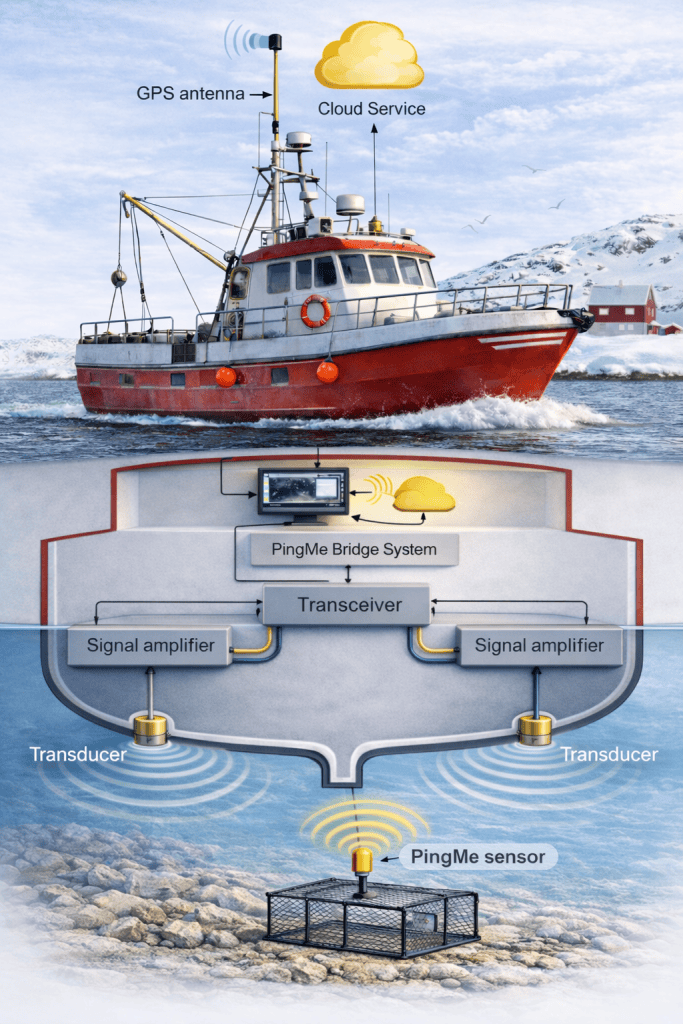
sources : https://osac.no/en/pingme-sensor/
At the center of OSAC’s product ecosystem is PingMe, a comprehensive position-tracking and environmental monitoring system that acts as a digital nervous system for commercial fishing gear and subsea infrastructure. The system utilizes low-cost, ruggedized transponders attached to underwater equipment. When pinged by a vessel, these sensors use proprietary hydro-acoustic protocols to transmit precise location data alongside real-time metrics on water temperature, depth, and localized currents.
To manage this influx of information, a dedicated cloud architecture indexes each sensor via an encrypted, unique ID. The technology allows any vessel in the immediate area to detect a PingMe sensor’s location, a vital feature for avoiding costly gear entanglement and collisions while strictly restricting access to the high-fidelity environmental data stream to only the asset owner.
Final Thought
OSAC arrives at a critical juncture for the global seafood and maritime industries, which face intense pressure from environmental regulators and escalating fuel costs. By commercializing laboratory physics into a ruggedized, mass-manufacturable tool, the company is effectively de-risking the subsurface economy. If OSAC and its backers at Investinor and Farvatn can successfully scale PingMe into an industry standard, they will have accomplished more than just saving commercial fishers money; they will have turned the world’s most stubborn digital blind spot into a transparent, data-driven frontier.
References
Ocean Space Acoustics. (n.d.). About OSAC. https://osac.no/about-osac/
SINTEF. (n.d.). About SINTEF. https://www.sintef.no/en/
Trandem, O., & Berg, T. (2018). Founding of Ocean Space Acoustics (Company information). Retrieved from https://osac.no/



Leave a Reply