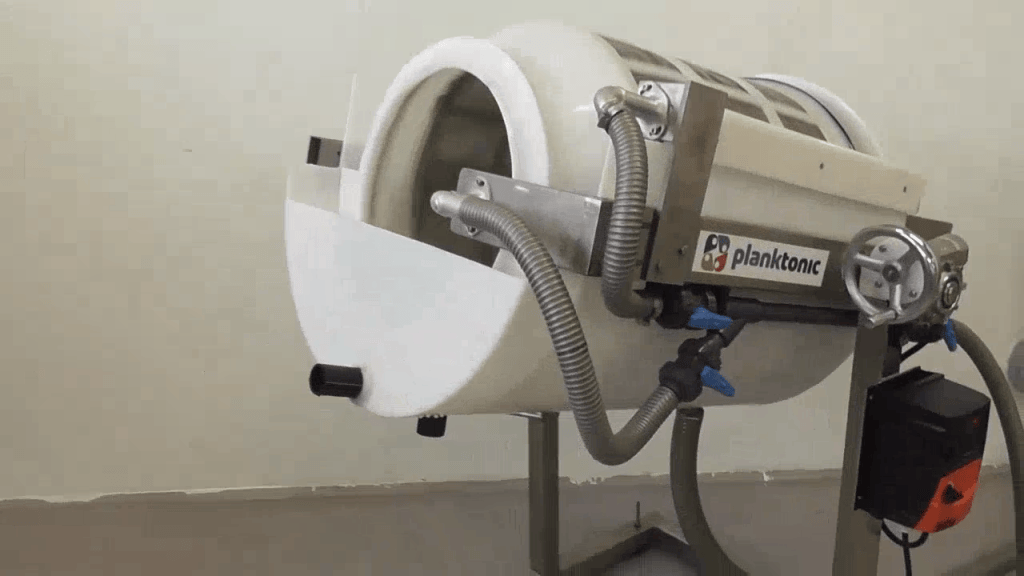
Image source: planktonic.no
Planktonic AS, a progressive Norwegian marine biotechnology pioneer backed by the government-funded venture capital firm Investinor, is aggressively expanding its commercial footprint across global aquaculture by deploying cryopreserved natural marine plankton to bypass unpredictable, land-based live-feed cultivation.
The Trondheim-headquartered company targets the highly fragile “start-feeding” phase of marine fish larvae, the primary logistical hurdle in commercial marine fish farming. While traditional hatcheries are forced to run space-consuming and contamination-prone land cultures of rotifers or Artemia, Planktonic delivers an off-the-shelf, sterile, and cryogenic alternative known as CryoPlankton. The technology halts and restarts the biological clock of wild marine organisms, transforming a complex biological variable into a streamlined industrial input.
Capital Injection and Scale
Founded in Trondheim, Norway, the firm spent a decade transitioning from advanced laboratory R&D into a highly scalable industrial platform. Planktonic’s commercialization and international scaling have been accelerated by sequential funding rounds:
- 2011–2014: Seed capital secured via grants from the Research Council of Norway and Innovation Norway.
- 2015: Anchored by an initial equity investment from Investinor, alongside €1.5 million from the EU Horizon 2020 SME program.
- 2017–2020: Secured NOK 15 million from Blue Horizon and an additional €2 million private placement to optimize the “CryoPlankton 2” commercial engine.
- Recent Expansion: Completed a major NOK 30 million ($2.9 million) capital raise to fuel international growth. The round was led by Ichthus Venture Capital (IVC) and Hatch’s Blue Revolution Fund, with follow-on participation from long-term shareholders including Investinor and Bondø Invest.
The Evolution: Out of the R&D Valley
Planktonic AS was established in 2008 by co-founders, Dr. Nils E. Tokle and Håvard Aakerøy, driven by the macro mandate to satisfy a surging global demand for sustainable seafood. Under the corporate execution of CEO Rune Husby, the firm spent a decade transitioning from advanced laboratory research and development into a leading, commercial-scale supplier of live feed to marine hatcheries across Europe.
The company’s commercial acceleration was significantly catalyzed by early and ongoing strategic funding from Investinor, Norway’s prominent state-backed investment arm, which manages capital on behalf of the government to target high-potential deep tech and marine innovations. This institutional capital allowed the firm to successfully secure five dedicated aquaculture licenses for farming barnacles in natural marine environments. In the spring, planktonic stages of barnacle nauplii settle naturally on provided substrates. Once harvested during winter cycles, their eggs are utilized to manufacture the shelf-stable CryoPlankton line, tapping into an abundant natural marine resource to optimize feed conversion ratios (FCR) during the downstream on-growing process.
Tech Stack: The One-Hour ‘Plug-and-Play’ Loop
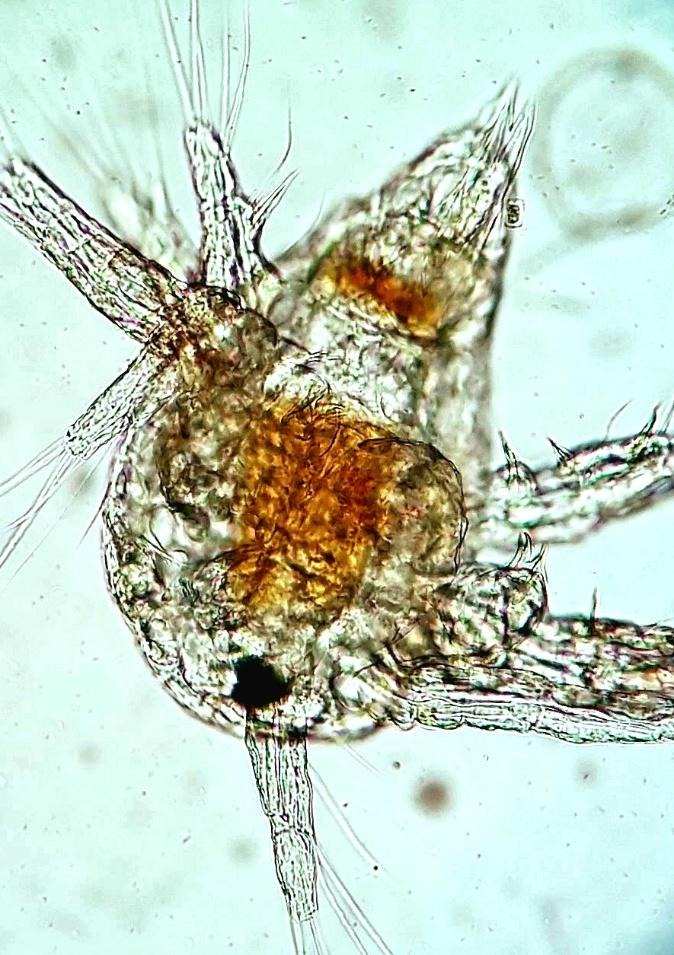
Image source: planktonic.no
The operational framework of CryoPlankton is engineered to streamline hatchery workflows down to a single hour of daily maintenance. The logistics chain completely circumvents traditional cultivation protocols via a three-tier pipeline:
- Order: Hatcheries order precise quantities of targeted nauplii directly from Planktonic, which ships the cryogenic containers in alignment with larval feeding schedules.
- Prepare: Technicians pull the frozen nauplii from their specialized storage containers and revitalize them through a rapid, controlled thawing sequence in natural seawater.
- Feed: Upon contact with the water, the nauplii instantly resume normal swimming activity, ready to be introduced to the larval tanks.
Bio-Validation & Nutritional Superstructure
The corporate value proposition of Planktonic relies on an unmatched nutritional profile. CryoPlankton possesses a natural biochemical architecture far superior to traditional live feeds due to exceptionally high proportions of key marine fatty acids (DHA/EPA) stored directly within their phospholipids.
Crucially, the technology resolves the industry’s severe biosecurity vulnerability. Pathogenic viruses, parasites, and opportunistic marine bacteria, most notably Vibrio spp., which regularly decimate commercial fish stocks, have never been detected in CryoPlankton. By delivering a sterile live-feed engine, Planktonic enables farmers to maximize fry survival, limit structural deformities, and reduce total production costs.
When deployed at hatcheries, technicians perform a rapid, controlled thawing sequence in seawater. Within minutes, the frozen organisms are reanimated into active, swimming prey, triggering the natural predatory striking instincts of fish larvae without introducing land-borne pathogens.
Final Thought
Planktonic’s commercial architecture reflects a structural shift away from capital-intensive, unpredictable livestock rearing toward high-precision biological manufacturing. By decoupling the availability of high-quality marine live feed from localized seasonal and environmental constraints, the company establishes a reliable infrastructure layer for the expanding global blue economy.
References
Daniotti, S., & Re, I. (2021). Marine Biotechnology: Challenges and Development Market Trends for the Enhancement of Biotic Resources in Industrial Pharmaceutical and Food Applications. A Statistical Analysis of Scientific Literature and Business Models. Marine Drugs, 19(2), 61. https://doi.org/10.3390/md19020061 Cited by: 64
MDPI. (2025). Early Nutrition Impacts on Growth, Skeletal Anomalies and Organ Ontogeny in Larval Atlantic Cod (Gadus morhua). Animals, 15(20), 2985. [Note: Based on Search Result 7.1 snippet]
Mitra, A., Flynn, K. J., Tillmann, U., Raven, J. A., Caron, D., Stoecker, D. K., et al. (2016). Defining Planktonic Protist Functional Groups on Mechanisms for Energy and Nutrient Acquisition: Incorporation of Diverse Mixotrophic Strategies. Protist, 167(2), 106-120. https://doi.org/10.1016/j.protis.2016.01.003




Leave a Reply