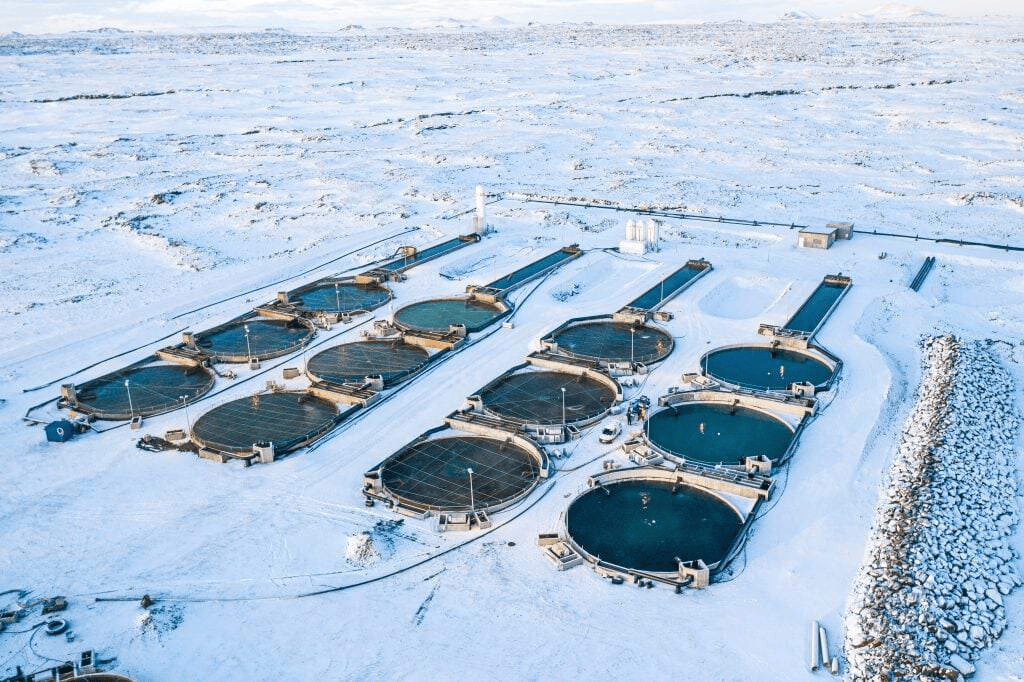
Image source: aqua-spark.nl
The global seafood industry is facing a math problem it cannot solve with conventional financing. By 2050, the planet will require an additional 40 million tons of seafood per year to feed nearly 10 billion people. With wild-capture fisheries plateauing due to catastrophic overfishing, aquaculture has surged into the spotlight as the world’s fastest-growing food sector. Yet, the industry remains an environmental paradox, crippled by volatile biological timelines, toxic antibiotic reliance, and an absurd “fish-in-fish-out” feedback loop where wild fish are caught just to feed farmed ones.
Operating from Utrecht, Netherlands, specialized investment fund Aqua-Spark is attempting to structurally engineer a sustainable “Blue Revolution.” Rather than executing the standard venture capital playbook which forces high-barrier tech companies into premature exits via seven-year fund cycles Aqua-Spark operates as a permanent, open-ended evergreen holding company. Profits are systematically recycled back into the asset pool, allowing the firm to hold positions indefinitely in an industry where one biological pathogen or regulatory shift can wipe out an entire vintage.
Background: Solving the 2050 Protein Gap
Aqua-Spark’s core investment thesis is built on moving the global aquaculture industry toward healthy, sustainable, and affordable commercial production. The fund targets small-to-medium enterprises (SMEs) across the globe that work toward the production of safe, accessible aquatic life such as fish, shellfish, and plants in ways that protect the ocean.
Traditional land-based and marine farming infrastructures suffer from fragmented data silos, extreme exposure to disease, and unsustainable feed depletion. Aqua-Spark acts as a critical market-maker, deploying capital and technical expertise to build a global, synergistic portfolio across the entire value chain. The firm aims to demonstrate that sustainable aquaculture organically produces superior financial returns alongside positive environmental and social outcomes.
Founder Story: The Architecture of Patient Capital
Aqua-Spark was launched in 2014 by impact investing pioneers Amy Novogratz and Mike Velings. Novogratz brought a distinct narrative focus to the ocean ecosystem, having previously directed the TED Prize, where she orchestrated oceanographer Sylvia Earle’s “Mission Blue” initiative. Recognizing that traditional private equity parameters are fundamentally unsuited for the unpredictable, long-horizon realities of marine biology, the husband-and-wife duo built a patient-capital architecture.
The fund’s structural framework relies on long-horizon, international backing:
- The Global Community: Powered by over 300 investors spanning more than 25 countries, ranging from family offices to institutional impact allocators.
- The Target Check Size: Typically deploying capital from $5 million to $20 million, strictly targeting substantial minority stakes of 20% to 49% to maintain heavy board influence without seizing operational control.
Portfolio: The Synergistic Value Chain Grid
Aqua-Spark rejects isolated investments. According to official fund metrics, it maps its capital deployments across a tightly integrated global matrix categorized into distinct commercial pillars:
1. Alternatives & Cultivated Seafood
- Umami Bioworks (Singapore): A deep-tech development and production platform for cultivated seafood, successfully growing stem cells from endangered or high-value aquaculture species including eel, lobster, and bluefin tuna to eliminate ocean harvesting pressure.
- Wanda Fish / Shiok Meats: Specialized investments pushing the frontiers of cell-based seafood and clean cellular protein alternatives to diversify global protein plates.
2. Aqua Tech & Smart Production
- Aquarech / Tepbac: Digital enterprise software and aquaculture platforms scaling automated, data-driven farm management solutions for smallholders in developing markets like East Africa and Vietnam.
- Ace Aquatec: Advanced marine electronics and technological hardware designed to optimize humane harvesting practices, predator protection, and acoustic biomass monitoring.
3. Feed Production & Waste Valorisation
- Protix (The Netherlands): A key pillar in the feed modernization engine that turns organic food waste into high-quality insect protein (Black Soldier Fly larvae), providing a scalable alternative to traditional wild-caught fishmeal.
- Sea6 Energy (India): A massive ocean-aquaplant cultivator harvesting seaweed at scale and engineering innovative byproducts that sequester carbon and provide organic inputs for agricultural food systems.
4. Disease Battling & Asset Logistics
- Proteon Pharmaceuticals (Poland): Developing advanced bacteriophage cocktails to combat bacterial infections in commercial ponds, providing a reliable, residue-free alternative to traditional antibiotics.
- Oceano Fresco / Fisher Piscicultura / Lake Harvest Group / Chicoa Fish Farm: Best-in-class, regionally dominant commercial farming networks spanning South America, Sub-Saharan Africa, and Europe, utilizing innovative cage engineering and plan optimizations to maximize animal welfare and yields.
- Indian Ocean Trepang (IOT) (Madagascar): A highly successful commercial sea cucumber farming operation utilizing a community-based smallholder model to fuse commercial conservation with socio-economic job creation.
Final Thought
Aqua-Spark’s evergreen holding company architecture is an elegant financial solution to the brutal realities of industrializing open-water biology. By decoupling the asset lifecycle from fixed fund termination dates, Novogratz and Velings give high-risk hardware, alternative proteins, and cell-based innovations the lengthy runway they require to reach true commercial maturity.
References
Armeni, A., & Ferreyra de Bone, M. (2017). Innovations in Financing Structures for Impact Enterprises: Spotlight on Latin America: Summary. Inter-American Development Bank. https://doi.org/10.18235/0006050 Cited by: 15
Awaluddin, R., Baga, L. M., & Suparno, O. (2017). Business Model Canvas Innovation and Blue Ocean Strategy for eFishery. 1st International Conference on Islamic Economics, Business, and Philanthropy, 680–686. https://doi.org/10.5220/0007087906800686 Cited by: 2
Stuchtey, M. R., Vincent, A., Merkl, A., Bucher, M., Haugan, P. M., Lubchenco, J., & Pangestu, M. E. (2023). Ocean Solutions That Benefit People, Nature and the Economy. The Blue Compendium, 783–906. https://doi.org/10.1007/978-3-031-16277-0_20 Cited by: 30
Sumaila, U. R., Walsh, M., Hoareau, K., Cox, A., Teh, L., Abdallah, P., Akpalu, W., Anna, Z., Benzaken, D., Crona, B., Fitzgerald, T., Heaps, L., Issifu, I., Karousakis, K., Lange, G. M., Leland, A., Miller, D., Sack, K., Shahnaz, D., Thiele, T., Vestergaard, N., Yagi, N., & Zhang, J. (2021). Financing a sustainable ocean economy. Nature Communications, 12(1). https://doi.org/10.1038/s41467-021-23168-y Cited by: 264


Leave a Reply