Image Credit: qbee.io
The maritime industry faces an increasing demand for secure, reliable, and scalable ways to manage software and IoT devices operating in remote environments such as ships, offshore platforms, and coastal stations. Traditional manual methods like direct SSH access or on-site maintenance are inefficient and risky when vessels operate far from shore with limited or unstable connectivity. Qbee.io, founded in Norway, addresses this problem by providing an automated, secure, and centralized platform for remote device management. In the maritime context, where connectivity is often limited by satellite networks and safety depends on system uptime, Qbee’s technology ensures continuous monitoring, over-the-air updates, and configuration management. The platform is already helping organizations like the Swedish Sea Rescue Society (SSRS) transition from analog to digital systems for improved operational visibility and maritime safety.
Qbee.io was founded in 2017 by Carsten Lehbrink, Dmitry Shevchenko, and Jon Henrik Bjørnstad, each bringing deep expertise in embedded systems, DevOps, and IoT security. Lehbrink, who serves as Head of Product, has extensive experience in industrial IoT software solutions, while Shevchenko and Bjørnstad lead the backend and platform development. The company is based in Oslo, Norway, and is backed by notable investors such as Sarsia Seed, Kongsberg Innovation, and Simula Innovation.
The Norwegian software-startup has secured notable seed investment, underscoring confidence in its remote device management platform. In February 2022, qbee closed a funding round raising NOK 9 million (≈ USD 1 million) led by investors Sarsia Seed and Kongsberg Innovation. That raise marked the major disclosed investment to date, with the company citing a total investment of about USD 1.02 million at that stage..
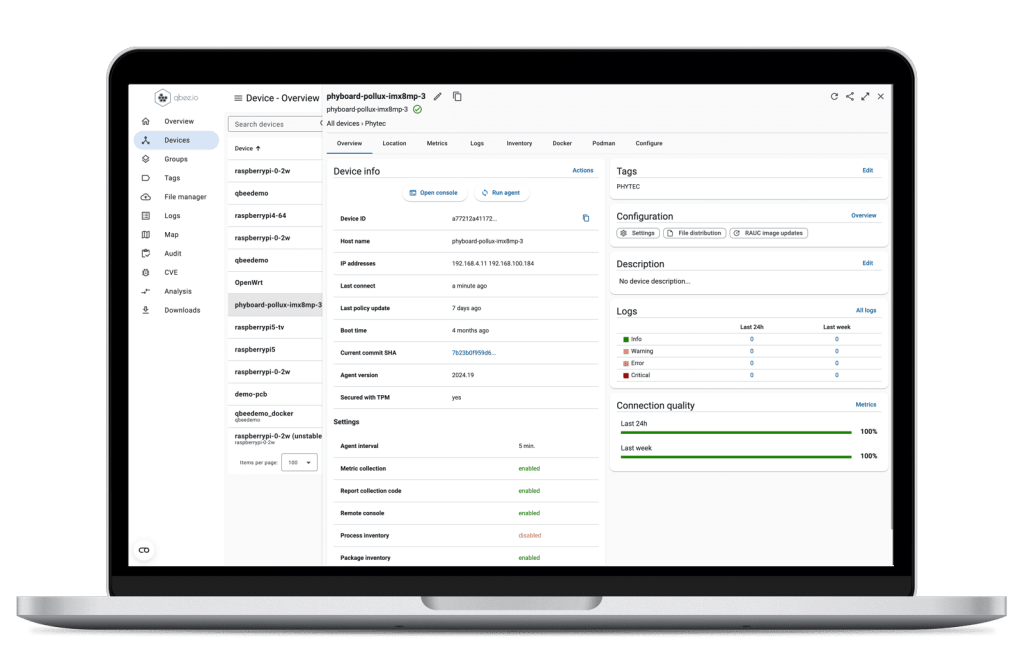
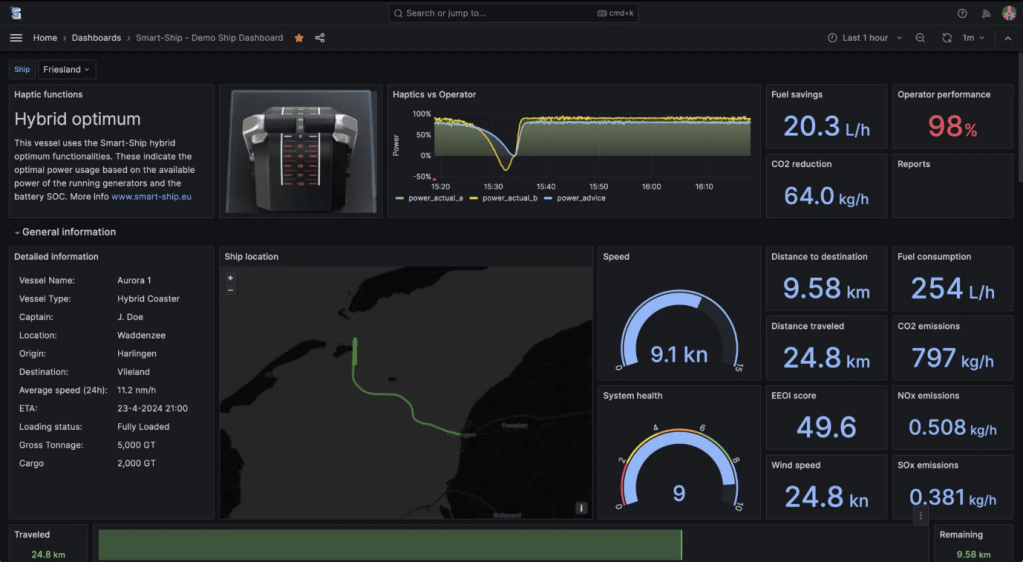
Qbee’s portfolio centers around a platform that manages embedded Linux devices remotely. The system enables secure Over The Air (OTA) software updates, remote access via encrypted tunnels, and detailed device monitoring and configuration management. For maritime operators, this technology brings practical advantages such as:
- Automatic updates for onboard sensors, cameras, and navigation systems without physical access.
- Real time monitoring of device health and performance across an entire fleet.
- Secure remote troubleshooting and support through NAT/firewall friendly connections.
- Reduced downtime and maintenance costs by automating updates and diagnostics.
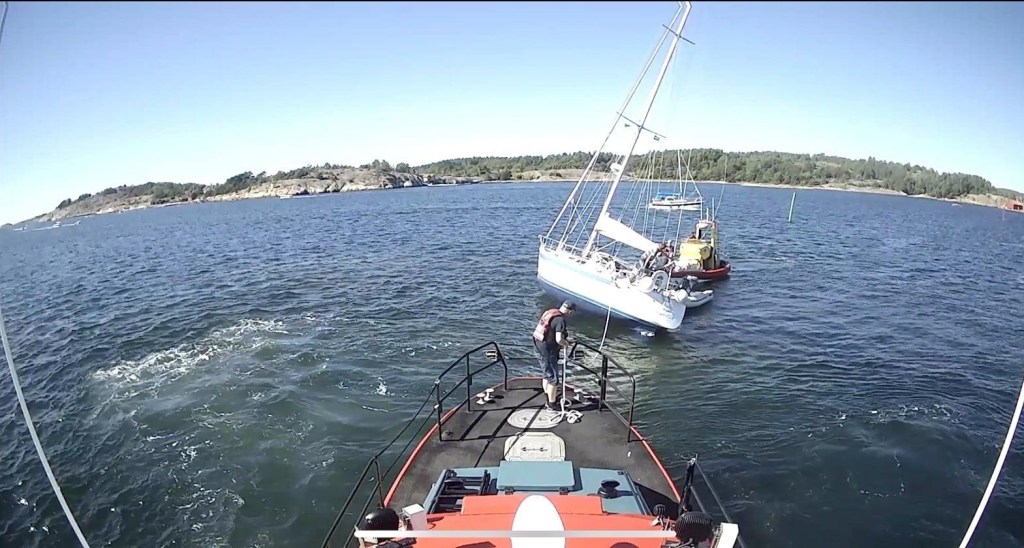
Image Credit: qbee.io
Qbee operates using a pull-based architecture, meaning that each device runs a lightweight agent that securely connects to Qbee’s central cloud platform at regular intervals. This design allows updates and configurations to be fetched (pulled) instead of pushed, which is ideal for networks with intermittent connectivity, such as vessels at sea. The communication uses HTTPS/TLS over port 443, allowing it to traverse firewalls and NAT gateways without special configuration. Administrators can upload software updates, container images, or system configurations via Qbee’s web dashboard. Each device then downloads the assigned updates, installs them automatically, and reports its status including inventory data, vulnerability information (CVE reports), and log files back to the central system. Additionally, Qbee provides secure remote access tools for SSH or web interface connections, allowing operators to perform debugging or configuration changes from anywhere. In maritime deployments, this means shipboard systems can be maintained without sending engineers offshore, drastically reducing operational costs and risks.
Qbee offers scalability for managing thousands of devices, strong cybersecurity with end to end encryption, automated updates, and compatibility with most Linux distributions (Yocto, OpenWRT, Buildroot). It provides detailed monitoring dashboards and simplifies compliance through centralized control. For maritime users, it is particularly beneficial because it works even under restricted networks and supports remote maintenance over satellite links. However, the platform’s performance still depends on available network connectivity, if a ship has no link for long periods, updates will be delayed. Integration with legacy or non Linux hardware can also be challenging, requiring customization. Finally, while Qbee provides strong security and device management, companies must still implement internal cybersecurity policies and processes to ensure end to end resilience.
The most well-documented maritime use case is with SSRS (Swedish Sea Rescue Society), where Qbee’s solution manages IP camera systems and streaming infrastructure aboard rescue boats. This collaboration improved maritime situational awareness and safety during rescue missions. Beyond SSRS, Qbee collaborates with Moxa Europe, integrating its device management system with industrial gateways for IIoT and remote automation. The company also partners with Kongsberg Innovation, reinforcing its ties to Norway’s maritime and offshore technology ecosystem. Qbee’s technology is further supported by the open-source community through its Yocto meta qbee layer, enabling developers to build secure, remotely managed embedded systems directly into maritime or industrial devices.
Final Thoughts
In an industry where downtime can cost lives and efficiency defines competitiveness, Qbee.io stands out as a pivotal enabler of maritime digital transformation. By simplifying how vessels and offshore systems are monitored, updated, and secured from shore, Qbee bridges the gap between maritime operations and modern IoT management. Its pull-based architecture and secure remote framework redefine what’s possible for fleets navigating limited connectivity and complex regulatory landscapes. While challenges remain in legacy system integration and connectivity constraints, Qbee’s approach signals a decisive shift one where automation, cybersecurity, and scalability converge to make the connected vessel not just a concept, but an operational reality. In doing so, Qbee.io helps the maritime sector steer confidently into a smarter, safer, and more resilient digital future.
References
Qbee AS. (2023). Securing the Waters: Advancing Maritime Safety. Retrieved from https://qbee.io/use-case/advancing-maritime-safety/
Qbee AS. (2025). Documentation and Platform Overview. Retrieved from https://qbee.io/docs/index.html
Nordic9. (2022, February 11). Qbee in a NOK 9 million funding deal backed by Sarsia Seed and Kongsberg Innovation. Retrieved from https://nordic9.com/news/qbee-in-a-nok-9-million-funding-deal-backed-by-sarsia-seed-and-kongsberg-innovation/
The Hub. (2024). Qbee AS Company Profile. Retrieved from https://thehub.io/startups/qbee-as
Embedded Artists. (2024). Qbee – OTA Lifecycle Management for IoT Devices. Retrieved from https://developer.embeddedartists.com/docs-app/ota/qbee/
Contributor : Ariana Tri Asti
Reviewer : Imam Buchari, David Ratner



Leave a Reply