While the electrification of cars has transformed land transport, for the global shipping industry, this pathway to net-zero has long been obstructed by a simple math problem: batteries are too heavy and too weak for the grueling demands of transoceanic trade. To move a 200,000-ton container ship across the Pacific, the world needs a fuel that packs the punch of diesel without the carbon fallout.
Electric Hydrogen (EH2), a Boston-based “unicorn” founded in 2020, is betting that the answer lies in radical scale. By moving away from small, modular electrolyzers and toward massive, 100-megawatt integrated chemical plants, the company is attempting to drive the cost of green hydrogen down to parity with fossil fuels, targeting the “hard-to-abate” heavy industries that currently account for a staggering share of global emissions.
The Intelligence: A Refinery for the Future
Led by a “who’s who” of renewable energy veterans, including former First Solar CTOs Raffi Garabedian and Dave Eaglesham, alongside Derek Warnick and Dorian West, EH2 is applying the lessons of the solar industry to water electrolysis.
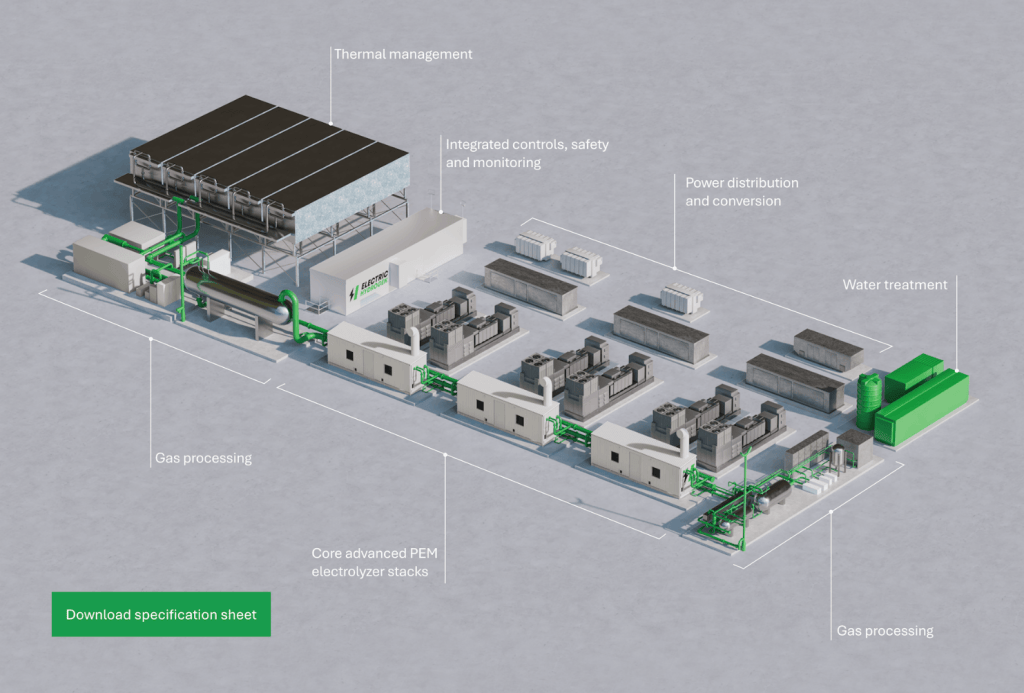
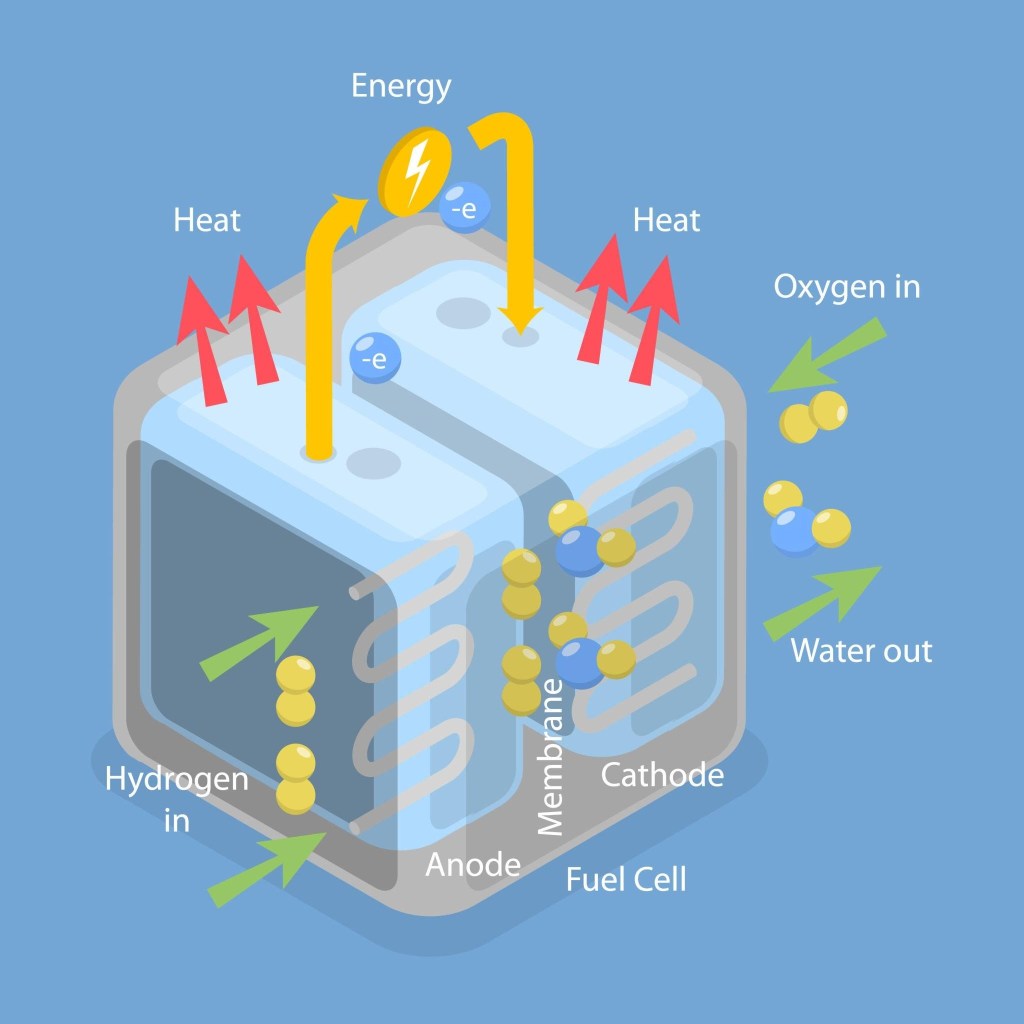
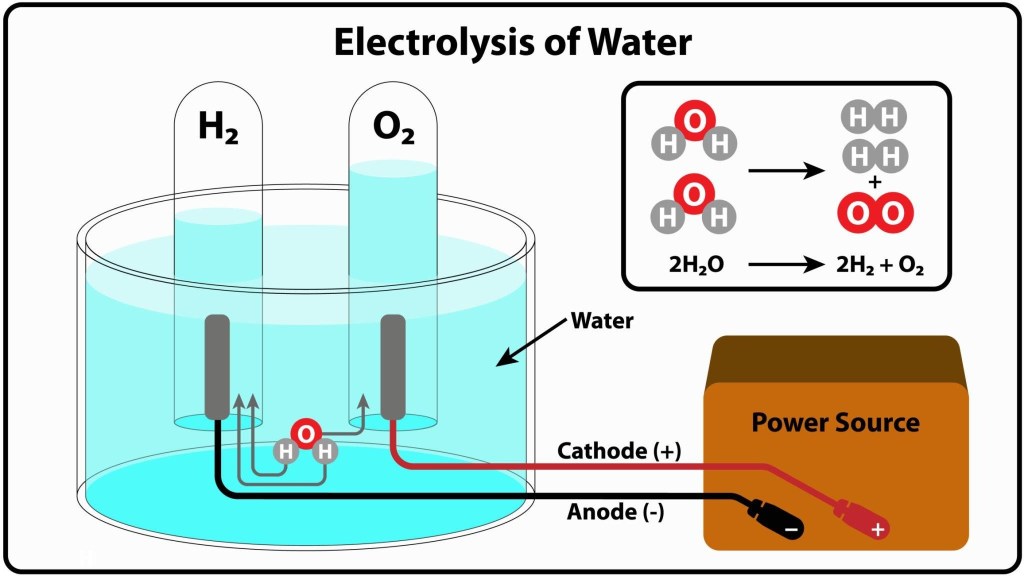
Their centerpiece technology, the HYPRPlant, is a 100-MW high-performance Proton Exchange Membrane (PEM) system. Unlike traditional models, EH2’s system is designed for “high-throughput,” meaning it can split water into hydrogen and oxygen at unprecedented power densities. For port authorities and shipping titans, this hardware acts as a localized “green refinery,” capable of drawing intermittent power from offshore wind arrays and converting it into the feedstock for zero-emission electro-fuels like e-ammonia and e-methanol.
The Capital: A Billion-Dollar Valuation Surge
EH2’s trajectory reflects a massive appetite among institutional and industrial investors for climate-tech that can scale. The company has secured over $600 million in capital, catapulting it into the upper echelons of clean-energy startups:
- Series A (2021): $24 million led by Bill Gates’s Breakthrough Energy Ventures (BEV).
- Series B (2022): $198 million featuring Amazon’s Climate Pledge Fund, Suncor Energy, and Fifth Wall.
- Series C (2023): A blockbuster $380 million round with participation from Fortescue, United Airlines Ventures, and Microsoft’s Climate Innovation Fund.
This war chest is being deployed to eliminate the “balance of plant” inefficiencies that have historically made green hydrogen a boutique (and prohibitively expensive) energy source.
The Strategy: Capturing “Curtailed” Energy
The operational genius of the HYPRPlant lies in its agility. Because the PEM system can ramp its power consumption up or down in seconds, it can capture the cheapest “curtailed” renewable energy when the wind is blowing hardest and the grid is oversupplied.
By integrating power electronics, water treatment, and gas processing into a singular 100-MW architecture, EH2 claims to reduce the physical footprint of hydrogen production significantly. This is critical for space-constrained global shipping hubs looking to transform from simple transit points into energy-dense refueling centers.
The Bottlenecks: Metals and Money
Despite the high level of market confidence, EH2 faces significant industrial headwinds. The PEM process relies on iridium and platinum-group metals, rare catalysts that create supply chain vulnerabilities. Furthermore, the massive capital expenditure (CAPEX) required to build 100-MW facilities remains a barrier for even the most well-capitalized port operators
Final Thought: Engineering the New Fuel Standard
Electric Hydrogen is moving the needle from incremental efficiency gains to a total supply chain overhaul. By focusing on massive scale and securing the backing of industrial giants like Fortescue and Amazon, EH2 is positioning itself to de-risk the future of global trade.
As the International Maritime Organization (IMO) pushes to tighten its zero-emission mandates in the future, the shipping industry no longer has the luxury of waiting for a “silver bullet.” For vessel owners and fleet operators, EH2’s high-throughput electrolysis offers a scalable, economically viable bridge to a carbon-free horizon. In the race to power the ships of tomorrow, EH2 is betting that the winners won’t just have the best science, they’ll have the biggest power plants.
References
Bolard, J., Dolci, F., Weidner, E., Gryc, K., Eynard, U., et al. (2026). Clean Energy Technology Observatory: Water Electrolysis and Hydrogen in the European Union – 2025 Status Report on Technology Development, Trends, Value Chains and Markets. Publications Office of the European Union. https://doi.org/10.2760/7797181
Kanchiralla, F. M., Brynolf, S., & Mjelde, A. (2024). Role of biofuels, electro-fuels, and blue fuels for shipping: environmental and economic life cycle considerations. Energy & Environmental Science, 17(18), 6393–6418. https://doi.org/10.1039/d4ee01641f Cited by: 62
Şahin, M. E. (2024). An Overview of Different Water Electrolyzer Types for Hydrogen Production. Energies, 17(19), 4944. https://doi.org/10.3390/en17194944 Cited by: 61
 Scorpa's Tech @ Sea
Leave a comment