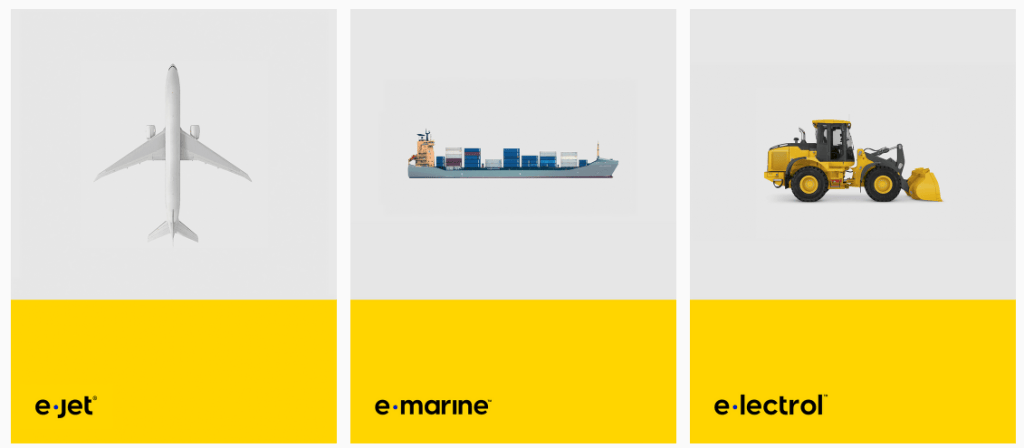
sources : https://www.twelve.co/post/twelve-faq-meet-the-carbon-transformation-company
The global maritime industry, responsible for a significant portion of global emissions, is facing an existential deadline to reach net-zero. While batteries work for ferries, the massive vessels that power global trade cannot carry enough of them to cross an ocean. Enter Twelve, a carbon transformation startup that is treating the atmosphere as an “above-ground oil well” to power the high seas.
By converting captured carbon dioxide into high-performance e-fuels, Twelve is positioning itself as the critical link in the maritime industry’s transition away from heavy fuel oil. Backed by substantial capital and strategic partnerships with cruise giants like Virgin Voyages, the Berkeley-based firm is proving that the future of shipping isn’t just electric, it’s atmospheric.
Founder Story: From Stanford Labs to a Global Mission
The genesis of Twelve is a story of academic rigor meeting a radical industrial vision. Co-founders Dr. Etosha Cave and Dr. Kendra Kuhl met during their PhD studies at Stanford University, where they worked in the lab of Thomas Jaramillo. Their research focused on a decades-old scientific challenge: how to use electricity and specialized catalysts to break the strong chemical bonds of carbon dioxide.
In those early days, the two scientists spent countless hours in the basement of the Stauffer building, testing materials that could efficiently convert CO₂ into the building blocks of modern life. They realized that their work shouldn’t just live in academic journals, it had the potential to replace the entire fossil fuel supply chain. Cave and Kuhl were soon joined by Nicholas Flanders, an entrepreneur with a focus on clean technology who shared their “climate-first” mindset, the trio founded the company to scale their breakthrough. Their journey took them through the Cyclotron Road incubator at the Lawrence Berkeley National Lab, where they transformed a laboratory experiment into the industrial-scale technology now known as carbon transformation. Originally named Opus 12 but later shortened to Twelve, the company name pays tribute to the most common isotope of carbon, Carbon-12, a critical component of all life on Earth as well as most modern products manufactured today.
The Intelligence: How E-Fuels Break the Maritime Bottleneck
Twelve’s proprietary technology uses an electrochemical reactor to break down captured CO₂, water, and renewable energy into a synthesis gas (syngas). This syngas is then refined into e-fuels, liquid hydrocarbons that are chemically identical to traditional fossil fuels but carbon-neutral.
For the maritime sector, this technology solves the “energy density” crisis:
- Drop-in Readiness: Unlike hydrogen or ammonia, which require entirely new engine designs and storage tanks, Twelve’s e-fuels are “drop-in” replacements. They work with existing marine engines and global bunkering infrastructure.
- The Virgin Voyages Partnership: Twelve has entered into a strategic partnership with Virgin Voyages to accelerate the supply of sustainable marine fuels. This collaboration aims to provide a scalable pathway for the cruise line to reach net-zero targets, demonstrating that luxury travel and environmental stewardship are no longer mutually exclusive.
- AirPlant™ Architecture: Through its industrial-scale AirPlant™ facilities, Twelve can produce the carbon-neutral molecules necessary to create e-diesel and e-methanol, providing a clean alternative for the massive container ships and tankers that form the backbone of global commerce.
The Capital & Partners: A Global Coalition for a Fossil-Free Future
Market confidence in Twelve is reflected in its massive financing rounds and an ecosystem of strategic partners spanning technology, transportation, and consumer goods. Twelve is backed by a “who’s who” of heavy-hitting investors, including TPG Rise Climate, DCVC, Capricorn Investment Group, Carbon Direct, the Microsoft Climate Innovation Fund, Breakout Ventures, and the Chan Zuckerberg Initiative.
Beyond capital, Twelve’s strength lies in its diverse network of partners to commercialize its “made from air” technology:
- Transportation & Maritime: Partnering with IAG (parent of British Airways), Alaska Airlines, and Virgin Voyages for sustainable jet and marine fuels.
- Consumer Goods & Automotive: Collaborating with Mercedes-Benz for the first car parts made from air, as well as Procter & Gamble (P&G) and Shopify for sustainable product ingredients.
- Global Innovation: Working with NASA to explore CO₂ use on Mars, while remaining supported by research institutions like the Lawrence Berkeley National Lab.
The Strategy: From Waste to Worth
Twelve’s approach, often called “industrial photosynthesis,” transforms CO₂ from a liability into a high-value asset. By capturing carbon before it enters the atmosphere or extracting it directly from the air and converting it into fuel, Twelve creates a circular carbon economy.
For shipping companies potentially facing more stringent International Maritime Organization (IMO) mandates and carbon taxes in the future, Twelve offers a pragmatic exit from fossil fuel dependency. Instead of waiting for a total fleet overhaul, vessel owners can start blending or switching to e-fuels today, significantly reducing their carbon intensity without the massive cost of new ship hulls.
Final Thought: Engineering the New Standard of Marine Power
Twelve is proving that the most sustainable fuel for the ocean comes from the air. By bridging the gap between cutting-edge electrocatalysis and the rigorous demands of the maritime supply chain, Dr. Etosha Cave and her team are de-risking the future of global trade.
As the partnership with Virgin Voyages and the rollout of AirPlant™ facilities accelerate, Twelve is making a compelling case: the era of “dirty” shipping is over. In the new blue economy, the ships that move the world’s cargo will be powered by the very emissions they once sought to eliminate. For Twelve, the horizon isn’t just zero-emission; it’s a world where the sea and the sky work in perfect, carbon-neutral harmony.
References
Twelve. (n.d.). About Twelve. https://www.twelve.co/about
Twelve. (n.d.). Meet the carbon transformation company. https://www.twelve.co/post/twelve-faq-meet-the-carbon-transformation-company
Twelve. (2024). Twelve announces $645 million in funding led by TPG to transform CO₂ into jet fuel and e-chemicals. https://www.twelve.co/post/twelve-announces-645-million-in-funding-led-by-tpg-to-transform-co2-in-jet-fuel-and-e-chemicals
Wikipedia contributors. (2026). Twelve (company). In Wikipedia, The Free Encyclopedia. https://en.wikipedia.org/wiki/Twelve_(company)
 Scorpa's Tech @ Sea
Leave a comment