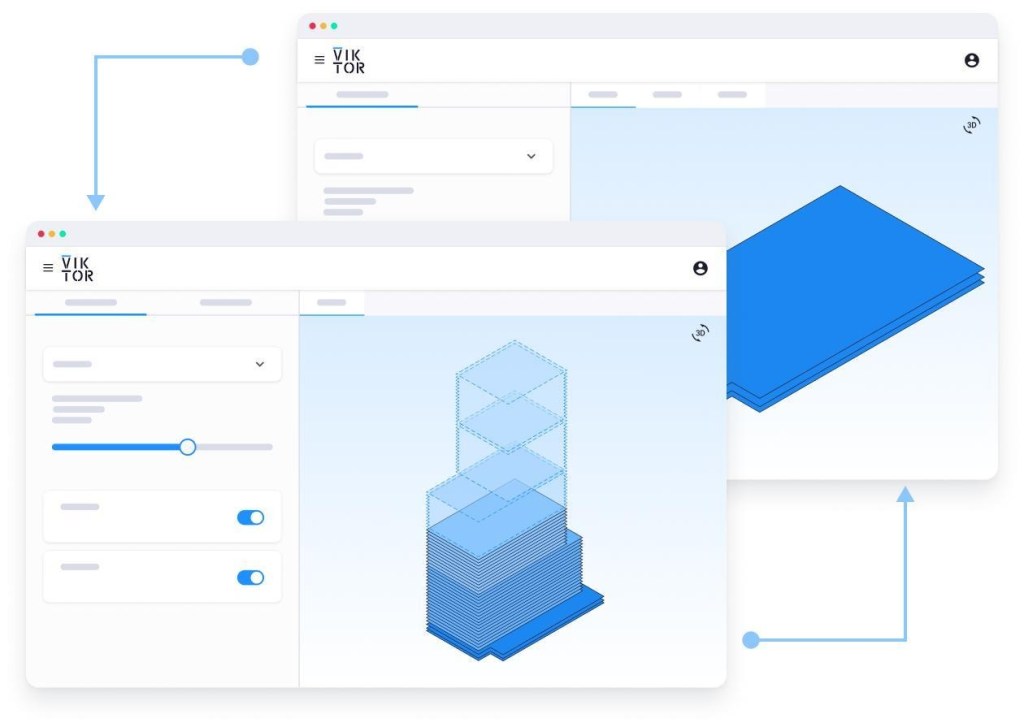
Sources : https://www.viktor.ai/
In the complex world of maritime construction, even the slightest miscalculation in a quay wall structure or an offshore foundation can be catastrophic. For years, maritime engineers have been trapped in slow, manual processes: moving data from soil reports to spreadsheets, and then into disconnected 3D modeling software.
VIKTOR.AI, a Dutch low-code platform supported by InnovationQuarter, has become the digital backbone for global maritime giants such as Boskalis, Arcadis, and Deltares. Through its platform, VIKTOR enables these firms to transform their proprietary engineering expertise into automated, precise, and lightning-fast web applications.
Background: Solving the Waterfront Design Challenge
Maritime and offshore engineering face unique hurdles: uncertain sub-sea soil conditions and dynamic water load pressures. VIKTOR was launched to unify this fragmented engineering ecosystem. The platform allows engineers to build their own applications that link geotechnical, hydraulic, and structural data into one seamless digital workflow.
With this automation, design work that typically takes weeks can now be completed in hours, providing companies with a massive competitive edge when bidding for large-scale port infrastructure projects.
Founders’ Story: Built by Engineers, for Engineers
VIKTOR was founded by Wouter Riedijk and Peter Madlener, two graduates of Delft University of Technology (TU Delft) who understood the frustration of working with inefficient manual workflows. They built VIKTOR with a vision to “unlock engineering potential” worldwide.
Instead of forcing engineers to become professional programmers, they created a Python-based platform that abstracts the complexity. This allows engineers to stay focused on technical logic while enjoying the ease and scalability of modern software development.
Maritime Case Studies: Real-World Field Efficiency
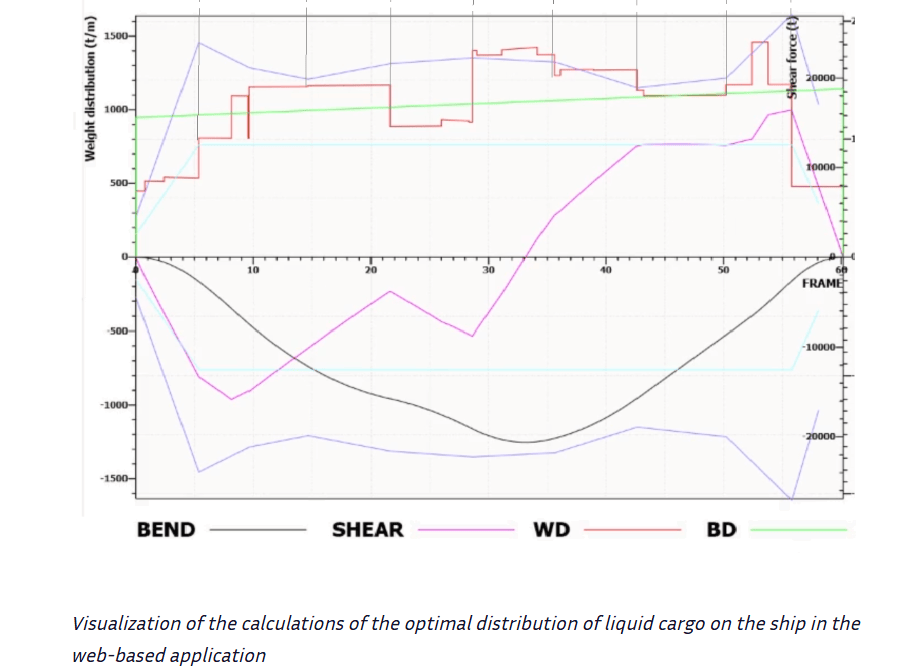
Sources : https://www.viktor.ai/
Below are four key areas where VIKTOR.AI is being utilized by global maritime and offshore firms to redefine their engineering workflows:
1. Accelerating Ship Design through API Integration
Key User: NAPA
- The Problem: NAPA is the global standard for ship design software, but engineering workflows often remain siloed. Designers frequently have to jump between different analysis tools, leading to fragmented data and slow iteration cycles.
- The VIKTOR Solution: NAPA collaborated with VIKTOR to build a web-based application that utilizes NAPA’s powerful APIs. This allows naval architects to run complex hull form simulations and stability analyses directly through a unified, browser-based VIKTOR interface.
- The Result: This digital transformation has removed the friction from ship design. Engineers can now perform more design iterations in less time, ensuring optimal vessel performance and safety long before the first steel is cut.
2. Data Science for Offshore Workability Analysis
Key User: Boskalis
- The Problem: Deciding if a vessel can safely operate in open waters known as “workability” depends on a chaotic mix of weather data, wave patterns, and ship characteristics. Historically, this analysis was manual or relied on rigid, slow-moving software.
- The VIKTOR Solution: Boskalis, a global leader in dredging and maritime infrastructure, built a Data Science application on VIKTOR. The app automates workability analysis by processing real-time environmental data (wind, currents, waves) and merging it with the ship’s hydrodynamic response.
- The Result: Decision-making is now faster and more accurate. Operational teams can precisely predict “safe windows” for offshore work, significantly reducing expensive downtime and increasing crew safety in harsh maritime environments.
3. Parametric Design for Offshore Wind Innovation
Key User: Major Offshore Wind Developers & Engineering Firms
- The Problem: Designing foundations for offshore wind farms requires balancing thousands of variables, including water depth, turbine weight, and soil composition. Using traditional methods to find the most cost-effective yet stable design could take weeks of manual work.
- The VIKTOR Solution: By using Python-based parametric design on the VIKTOR platform, engineering teams have built apps that automate the generation of turbine foundation models. Engineers input key parameters, and the system instantly generates and evaluates thousands of design variations.
- The Result: The optimization process has been slashed from weeks to hours. This allows firms to identify the most material-efficient designs that still meet strict safety standards, directly lowering the cost of renewable energy.
4. Modernizing Gravity-Based Foundations: From Excel to the Web
Key User: Structural Engineering Firms (e.g., BAM, Royal HaskoningDHV)
- The Problem: Many firms still rely on massive, complex Excel spreadsheets to calculate Gravity-Based Foundations (GBF). These spreadsheets are difficult to version-control, prone to manual input errors, and lack 3D visualization.
- The VIKTOR Solution: Companies are migrating their legacy Excel calculations into Python code hosted on the VIKTOR platform. These web apps feature intuitive user interfaces, real-time 3D visualizations, and automatic integration with structural analysis software.
- The Result: Calculation reliability has improved drastically. With a unified web interface, teams always work on the latest version of the app, and design results can be visualized instantly for client presentations, fostering better collaboration across global projects.
Capital & Partners: Part of the Rotterdam Innovation Ecosystem
Headquartered in the heart of Rotterdam, VIKTOR is a strategic asset in the InnovationQuarter portfolio. A Series A funding round of €5.1 million, led by Newion and InnovationQuarter, has accelerated the platform’s international expansion.
Strategic partnerships with institutions like Deltares (the Dutch institute for water and subsurface research) ensure that the VIKTOR platform remains aligned with the latest maritime science standards. Furthermore, integrations with industry-standard software like SCIA, Grasshopper, and various BIM systems make VIKTOR easy to adopt for project teams globally
Final Thought: A New Standard for Future Engineers
VIKTOR.AI has proven that digitalization in the maritime sector is no longer about buying off-the-shelf software; it is about building tools tailored to a firm’s specific expertise. By empowering engineers to create their own applications, VIKTOR not only speeds up the design process but also ensures the safety and efficiency of global infrastructure.
In the future, the development of smarter ports and more efficient offshore wind farms will no longer depend solely on how much data is available, but on how quickly engineers can turn that data into solutions through platforms like VIKTOR. In the hands of modern engineers, VIKTOR is the digital compass toward a greener, more resilient maritime future
 Scorpa's Tech @ Sea
Leave a comment